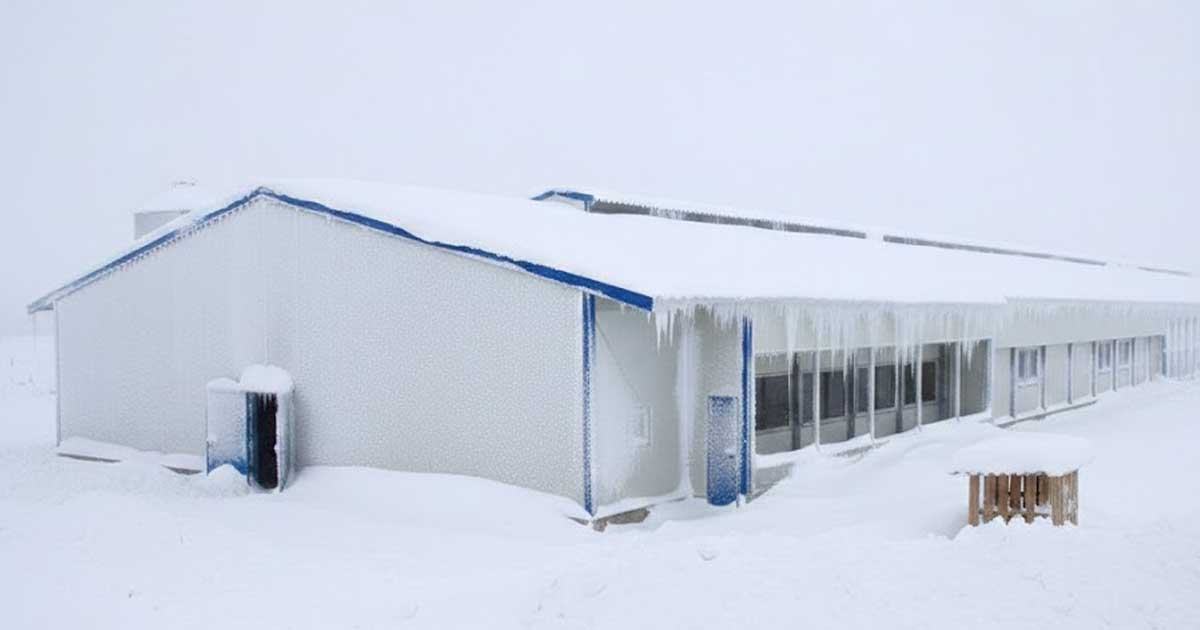
Heavy snowfall and ice accumulation from last weekend’s winter storm caused widespread damage to agricultural structures across Arkansas, with dozens of poultry houses collapsing under the weight.
The storm dumped up to 12 inches of snow and 2 inches of sleet across parts of the state, with the ice layer proving particularly destructive to older farm buildings.
Bobby Powell, Yell County extension staff chair with the University of Arkansas System Division of Agriculture, said approximately 70 poultry houses collapsed throughout the Arkansas River Valley. Many were older structures no longer insured against collapse.
“A lot of those farmers are just stuck,” Powell said. “They’re not going to get any insurance money for those — it’s going to be tough. Many producers will have to rebuild and go into major debt to keep their farms going.”
Powell said the 2 inches of sleet that fell on top of 5 to 6 inches of snow was particularly heavy, likely pushing structures past their breaking point.
In Hempstead County, agriculture agent Kimberly Rowe reported several pullet houses collapsed around the McCaskill area. Regionally, the count for collapsed poultry houses, primarily broiler houses, is estimated in the 30s and continuing to rise.
“The brunt of the devastation is being taken by our poultry producers,” Rowe said. One barn housing 4-H show goats also collapsed, though the animals were not injured.
On Wednesday afternoon, Barry’s Grocery & Market in Hope, an older brick building with a flat roof, suffered a partial collapse. Local media reported the store was empty and no injuries occurred.
Eva Langley, Pike County extension staff chair, said more than a dozen chicken houses and boat dock shelters at the county’s three marinas collapsed. Some poultry producers are running out of feed as county roads remain impassable.
“We’ve had three feed trucks that have been ditched trying to get to chicken houses for feed,” Langley said. She noted neighbors with capable vehicles are responding to social media calls for help feeding animals.
Cattle producers face additional challenges breaking ice for water access, as the state was experiencing drought conditions before the storm hit.
“It’s a unique storm, because we were in a D-3 drought when this happened,” said Kevin Lawson, Faulkner County extension agriculture agent. “I had a producer in his 50s tell me that this will be the first time they’ll have to break ice.”