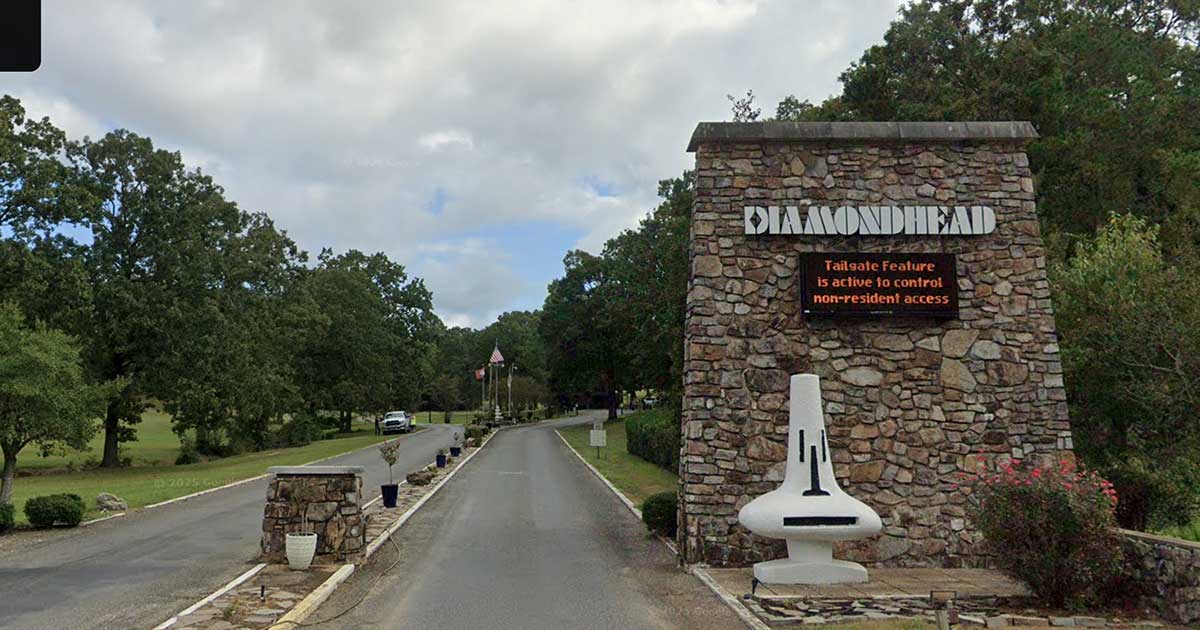
HOT SPRINGS, Ark. — For two years, a war has been raging over who runs Diamondhead, the gated resort and golf community on Lake Catherine.
On one side: developer Mark Lane, who owns more than half the lots in the roughly 3,700-lot subdivision, and the property owners’ association his votes now control. On the other: a group of residents who say Lane seized power through an illegal vote — and who responded by turning Diamondhead into an actual city, with a mayor, a council and its own building permits.
The fight is playing out in two lawsuits in Garland County Circuit Court. In the first, residents are suing the association, Lane and his company, asking a judge to undo a 2024 vote that put the developer fully in charge. In the second, the association and Lane’s company are suing the new City of Diamondhead — and the residents who now run it — asking a judge to declare the city itself void.
Together, the cases will decide whether a developer can outvote every resident combined, and whether a brand-new city can operate inside a private subdivision — issuing permits and paving roads it doesn’t own. And they’re both very much alive: the city filed its formal denial of all claims on July 14, demanding a jury trial, in the newest filing in either case.
How it started
Diamondhead has been a private resort and golf community since 1969. Its roads are privately owned, and the Diamondhead Property Owners’ Association runs the gate, the golf course and the amenities.
Omni Home Builders, led by Mark Lane, bought out the previous developer in 2018 and now owns more than half the lots in the subdivision. Lane and resident-led boards have clashed for years — Omni sued the association and its board back in 2020. That case settled, and in late 2022 the two sides agreed to new bylaws splitting the board between resident-elected and developer-elected seats.
The peace lasted about a year and a half.
The Memorial Day weekend vote
On Saturday, May 25, 2024 — the middle of Memorial Day weekend — the association held a special membership meeting that blew everything up.
A group of residents sued over it days later. They say the meeting notice went out late, that enough members signed a petition to cancel the meeting, and that the board president ignored the cancellation and held the vote anyway. Only 15 residents showed up to vote, they say — nowhere near enough for a quorum.
But Lane showed up, and he cast about 1,400 votes — one for each lot Omni owns. The residents argue those votes shouldn’t count. Under the community’s governing documents, they say, developer-owned lots don’t pay dues and don’t vote. And even if the developer could buy his way into voting by paying dues on those lots — roughly $763,000 worth — they say there’s no record he ever did.
The vote that day scrapped the 2022 power-sharing deal and replaced it with new bylaws putting the developer fully in charge until 90 percent of Diamondhead’s lots are sold. Under the new rules, Lane appoints the entire board, can remove any board member at his sole discretion, and holds the power to override any board decision.
The association, Omni and the board members deny doing anything wrong. Their attorney argues a judge already ruled in the 2020 case that Omni can vote its lots once it pays the dues, and that courts generally stay out of disputes over how private associations govern themselves.
A five-day win for the residents
The residents got a judge to freeze things — briefly. In late July 2024, Judge Ralph Ohm signed an emergency order blocking the new bylaws and putting the 2022 rules back in place.
It didn’t last a week. The association’s lawyers pointed out that none of the defendants had even been served with the lawsuit yet, and that the residents had waited six weeks to claim an “emergency.” After a hearing on July 31, the judge tossed the order, finding the residents hadn’t shown they’d suffer the kind of harm that justifies emergency relief.
The residents later dropped four board members from the lawsuit, saying those four had actually opposed the takeover and were on the residents’ side. One of them, Monica Weibust, switched teams entirely — she’s now one of the plaintiffs.
The two sides tried mediation in January 2025. It went nowhere.
Then the residents built a city
While that lawsuit dragged on, residents tried a different play: they turned Diamondhead into a city.
The county approved the incorporation in March 2024, though the judge openly worried about how a city would work inside a private community — especially the roads, which the city wouldn’t own and couldn’t legally maintain with county road taxes. Lane fought the incorporation in court personally and lost.
Ralph Carruth — the lead plaintiff in the residents’ lawsuit — became mayor. Fellow plaintiff Melanie Landrum joined the city council.
In August 2025, the association and Omni sued the new city, calling it a “Shadow POA” — their argument being that residents who couldn’t win control of the association at the ballot box simply built themselves a government to take it another way. As evidence, they point to residents’ own Facebook posts before the May 2024 vote urging neighbors to stay home and kill the quorum, including one predicting that “City Ordinances will override POA.”
The lawsuit asks the court to declare the city void — claiming the required newspaper notice was never published before incorporation — and to stop the city from issuing building permits, running police or fire service, paving the private roads, touching the gates or buying a lot for a city hall in a residential-only subdivision.
The city’s answer this month denies all of it, saying Diamondhead is a legally formed city with the same powers as any other Arkansas town, that the incorporation fight was already decided, and that the city and its officials are immune from these kinds of claims under state law.
Where things stand
Neither case is close to over.
The residents’ suit against the association spent last fall bogged down in fights over evidence — with each side accusing the other of stonewalling — and a renewed attempt by the residents to freeze the association’s operations, which the defense called premature. The association says it turned over years of bank records and that the residents can’t point to a single improper transaction; the residents say their requests to inspect association records were repeatedly refused.
The city case is now headed toward trial, with both sides demanding a jury.
In the meantime, Diamondhead is a community with two governments that don’t recognize each other: a property owners’ association running under bylaws the residents call illegal, and a city the developer calls fake — each claiming it alone runs the same few square miles behind the gate.
This story is based on court filings in Garland County Circuit Court cases 26CV-24-657 and 26CV-25-1294 from June 2024 through July 2026.