ROLAND, Ark. — Gov. Sarah Huckabee Sanders announced Thursday that a record 54.3 million visitors traveled to Arkansas in 2025, generating $10.2 billion in visitor spending and a total economic impact of $17.4 billion — but the state’s own prior report suggests the record is in headcount, not dollars.
Sanders made the announcement at the Pinnacle Mountain State Park Visitor Center alongside officials with the Arkansas Department of Parks, Heritage and Tourism. The findings come from the state’s 2025 Economic Impact Report, prepared by consulting firm Tourism Economics.
“Arkansas has always been the Natural State, but today, more Americans than ever are discovering what Arkansans have known for generations,” Sanders said.
According to the report, tourism supported 71,860 direct jobs statewide in 2025, and visitor-generated state and local taxes offset what would otherwise be an additional $919 in annual taxes per Arkansas household. Food and beverage led all spending categories at $3.0 billion. The state also closed Fiscal Year 2026 with a record $26.9 million in collections from its 2% tourism tax on lodging and attractions, which funds Arkansas Tourism’s marketing budget.
The number the press release didn’t explain
The governor’s office described 2025 as the year visitors “spent more than any year on record.” But the state’s own 2024 Arkansas Tourism Economic Impact Report — still the version posted on ADPHT’s website — reported $10.3 billion in visitor spending for 2024, which that report labeled an “all-time record high.” That figure is roughly $100 million higher than the $10.2 billion announced for 2025.
Other year-over-year comparisons point the same direction. The 2024 report calculated that visitor-paid taxes offset $930 per household; the 2025 figure is $919. The total economic impact — $17.4 billion — is identical in both years. The state has not said whether the 2024 figures were revised downward or whether methodology changed between reports.
Simple math shows why spending flattened even as visitation grew 4.4%: average direct spending per trip fell from roughly $198 in 2024 to about $188 in 2025, a decline of about 5%. Industry analysts attribute the drop partly to the composition of the visitor count — Tourism Economics counts visitor trips, not unique people, and roughly 55% of trips recorded in 2025 were taken by Arkansas residents traveling inside their own state. Those trips tend to be shorter, with lower transportation and lodging costs.
The “record” tax collection figure also deserves context: the $26.9 million cited Thursday covers Fiscal Year 2026, while the state’s 2024 report showed calendar-year 2024 collections of $26.8 million — a difference of about $100,000 on a different measuring period.
Where everyone is actually going
The 2025 report’s county-level tables have not yet been published, but the state’s most recent county data — from the 2024 report — shows Arkansas tourism dollars concentrate heavily in four metro corridors:
Central Arkansas dominates. Pulaski County alone generated $2.19 billion in visitor spending and supported more than 12,200 jobs — the largest of any county. The broader Heart of Arkansas region topped $2.7 billion.
Northwest Arkansas is growing fastest. The Northwest Arkansas region posted $2.39 billion in visitor spending, up 4.9% — the fastest regional growth in the state. Benton County ($1.22 billion, up 5.4%) and Washington County ($806 million, up 4.9%) led the surge, powered by Bentonville’s mountain biking and museum economy.
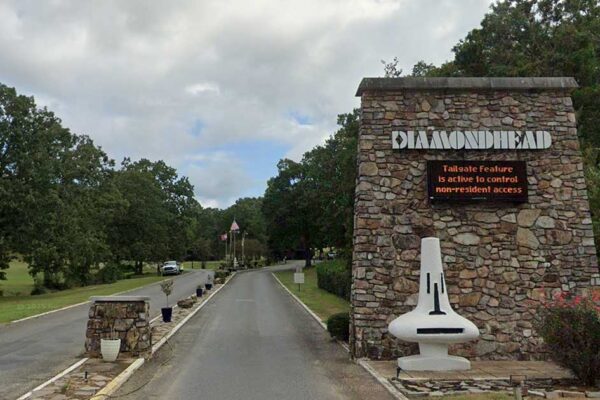
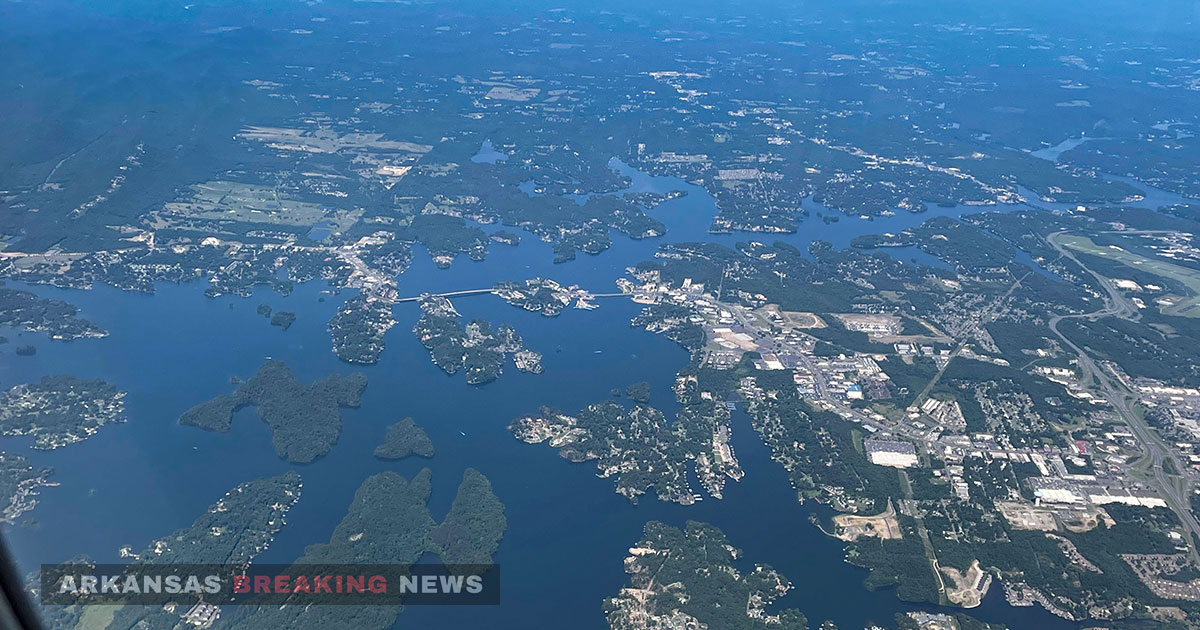
Hot Springs remains the classic draw. Garland County pulled in $936.5 million, and Hot Springs National Park led all national park sites in the state with nearly 2.5 million recreation visits in 2025. The Diamond Lakes region overall generated nearly $1.2 billion.
The Delta and Fort Smith round it out. Arkansas Delta Byways counties combined for $1.2 billion — buoyed by Crittenden County’s interstate traffic ($317.7 million) and Craighead County ($324.9 million) — while Sebastian County generated $435 million.
Statewide attraction data adds a wrinkle: while overall visitation climbed, Arkansas State Parks visits actually declined in 2024, falling to 7.7 million from 8.4 million in 2023. National Park Service site visits in Arkansas totaled about 4.5 million.
The southwest Arkansas picture
Tourism remains a smaller slice of the economy in southwest Arkansas. The Arkansas’s Great Southwest region — which includes the Texarkana area — generated $302.5 million in visitor spending in 2024, supporting about 1,900 jobs.
Miller County led the region at $151.1 million, up 3.0% year over year. Hempstead County followed at $58.6 million, with Sevier County at $20.6 million, Little River County at $17.8 million and Howard County at $16.1 million. Lafayette County, at $13 million, was one of the few counties in the state to post a decline, slipping 0.3%.
What’s behind the push
Sanders launched the Natural State Initiative in 2023, led by First Gentleman Bryan Sanders, making outdoor recreation and tourism a centerpiece of the state’s economic strategy. The administration has created Economic Opportunity Zones around Pinnacle Mountain, Petit Jean, Delta Heritage Trail and Queen Wilhelmina state parks to attract private tourism investment.
For the first time, the state has also begun publishing outdoor recreation economic data alongside tourism figures. Federal Bureau of Economic Analysis data show outdoor recreation contributed $7.3 billion to Arkansas’ economy — 2.5% of state GDP, surpassing farming — and has grown 33% since 2019.