HOT SPRINGS — The Hot Springs Board of Directors voted 4-3 Tuesday night to reject a proposal that would have eliminated paid parking everywhere downtown except Central Avenue.
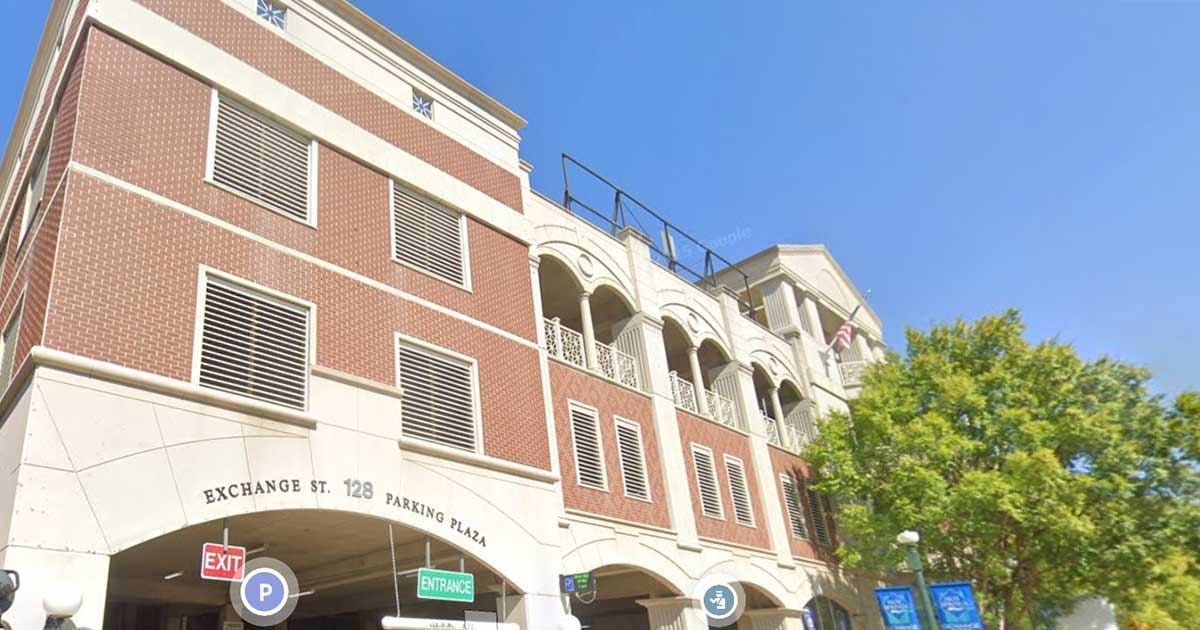
The amendment came from District 4 Director Dudley Webb III during debate on an unrelated parking ordinance. It would have wiped out the $2 per hour secondary zones covering Fountain Street, Hill Wheatley Plaza and the Exchange Street Parking Plaza, leaving only the $4 per hour spaces on Central Avenue regulated.
Directors Phyllis Beard of District 2 and Karen Garcia of District 5 joined Webb in support. Directors Erin Holliday of District 1, Marcia Dobbs-Smith of District 3 and Steve Trusty of District 6 voted no, along with Mayor Pat McCabe.
All three directors who voted for the amendment hold seats that expire in December. Webb, Beard and Garcia are up for election this year, as is McCabe, who voted against it. Holliday, Dobbs-Smith and Trusty are not on the ballot until 2028.
The board then unanimously approved the original ordinance, O-26-29, which makes roughly 80 spaces on the top two levels of the Exchange Street garage free and unregulated.
Webb: the parking deck “isn’t gonna happen”
Webb argued the city’s stated reason for paid parking has collapsed. Revenue was supposed to fund a new downtown parking deck. He said the math no longer supports that goal.
“We’re not on track to build a parking garage,” Webb said. “As well as we tried to hit that goal, wherever that goal may have come from, which I still don’t know, it isn’t going to happen. It isn’t a reality.”
He pressed further.
“Why are we still trying to just hit everybody on these fees for parking downtown? Why are we trying to punish people for wanting to come downtown and shop?”
McCabe interrupted. “Nobody’s being punished.”
Webb read from a February letter submitted to the board by the Downtown Association of Hot Springs. The letter said most downtown business owners had reported a decline in sales since paid parking began, with some reporting reductions of up to 40% compared to prior years.
He said feedback he has collected since then points the same direction.
“Downtown paid parking hurts local businesses, hurts our employees downtown, and hurts our locals, and prevents a lot of our locals from wanting to do any shopping downtown,” Webb said.
Two board members cited their own downtown businesses
Holliday pushed back using her own numbers. She works for Collective Arts Gallery, which operates a second-floor space at 620 Central Avenue with no on-street parking directly out front.
“Our 2026 revenue is up over 12 and a half percent from 2025,” she said. “And we sell art. I mean, that’s a tough sale.”
Holliday, who said she keeps the gallery’s books, argued the February letter predates the board’s March rate restructuring and should not drive a decision now.
“That information is anecdotal from six months ago in advance of a previous large change,” she said. “The adjustment we made may have corrected it for those businesses.”
McCabe said he and his wife own a business on Bathhouse Row (Hotel Hale) with no on-site parking and have seen no impact on sales or occupancy.
Webb responded that two data points do not make a trend.
“I’m glad to hear that two members of our board’s businesses have positive revenue. That’s good to hear,” he said. “I will remind everybody that two is not most.”
The revenue picture
City Manager Bill Burrough said parking revenue has climbed sharply since the board restructured rates in March.
Monthly collections for 2026 ran $30,885 in January and $34,500 in February. After the change, March brought nearly $103,000, April $80,000, May $85,000 and June nearly $104,000.
Burrough said the March through July average is $94,600 a month, which annualizes to about $1.135 million. Deputy City Manager Lance Spicer put annual expenses at $450,000 to $500,000 including depreciation.
Before paid parking, Burrough said, the general fund was subsidizing parking operations by roughly $600,000 a year.
Gross parking revenue is about $540,000 through seven months. All of 2025 brought in roughly $600,000. About $90,000 of this year’s total came from the Exchange Street garage.
The city has cut paid spaces from 1,100 to about 500 since the program began. Tuesday’s ordinance drops that to roughly 420.
Burrough also noted that February sales figures cited by downtown merchants came out of one of the worst winters in his 25 years with the city, with 10 days of shutdown.
No bond scenarios have been run
Under questioning from Webb, Burrough acknowledged the city has not asked its bond adviser to model anything.
“We’ve had some discussions with Bob Wright, but have not asked him to run any particular scenarios for us at this time,” Burrough said.
A new deck would run $40,000 to $70,000 per space depending on design, Burrough said, putting a 300-space facility somewhere between $12 million and $15 million. Webb pegged the range at $14 million to $20 million.
Burrough said he has historically targeted a 15-year payout, while most parking bonds stretch 25 to 30 years. He said current revenue may not fund a deck outright but could position the city for a public-private partnership or the purchase of additional surface lots.
Trusty said killing the secondary zones would foreclose that option.
“If we pass this amendment and attach it to this, not only is it going to hamper, it’s probably going to eliminate our ability to ever know if we can establish that revenue stream,” he said.
Dobbs-Smith asked the board to stop making changes.
“How are we going to be able to ask to float a bond if we keep changing our source of revenue?” she said. She also noted the city charged for parking at meters on Malvern Avenue, Fountain Street, Hill Wheatley Plaza and the Bridge Street lot for years before the current program.
She was skeptical of the 40% figure. “If my business was down 60% or 40% or even 10%, I’d fill up that audience out there.”
Holliday said she would support gathering current sales data from downtown businesses and asking bond counsel to run scenarios ahead of the board’s upcoming goal-setting session.
What the ordinance actually does
Levels 3A and 3B of the Exchange Street garage become free, unmetered and unregulated on a first come, first served basis. That is about 80 of the garage’s roughly 253 spaces across six levels.
The rest of the garage stays at $2 per hour with enforcement from 8 a.m. to 6 p.m. The ordinance also raises the maximum stay from 10 hours to 24 and sets opening and closing times for the ground-floor restrooms.
Spicer said occupancy reports for May, June and July showed the garage topping out around 50% to 60%. He said the change came out of an ad hoc downtown parking committee that repeatedly raised the lack of free parking for downtown employees.
The 10 p.m. entry gate does not change. Drivers can exit after 10 but cannot enter.
Holliday flagged that limit for downtown residents who work late shifts. “We’ve had someone come up a few times whose work schedule is such that they would likely not be there by 10 o’clock,” she said.
McCabe said the 24-hour cap is meant to stop people from using the garage as storage. He said one person had parked three vehicles side by side until city officials made him move them.
Tyler Draper of District 5 was the only member of the public to speak. He said he worked downtown for six years and that friends still working there had complained about losing free garage parking.
“I think this is a great idea, great compromise,” Draper said.
Also at the meeting
Directors unanimously waived competitive bidding for a $100,000 emergency repair to a sinkhole on Broadway Street. Deputy City Manager Denny McPhate said the sinkhole exposed a breach in the Hot Springs Creek tunnel walls, where creek action has been pulling soil out from behind the concrete arch.
Garcia warned that drivers keep entering the closed lane head-on because there is no detour signage. “Somebody’s gonna get hit,” she said. Staff said signs would go up the next morning.
Burrough also clarified that the city has never towed a vehicle under its parking program. He said privately owned downtown lots that use the same Park Mobile app have recently begun enforcing, and drivers accustomed to no enforcement are being towed from those lots.
Get the biggest Arkansas stories in your inbox
Breaking news, arrests and court updates from across the state. Free.
Confirmation email required. Powered by Mailchimp.