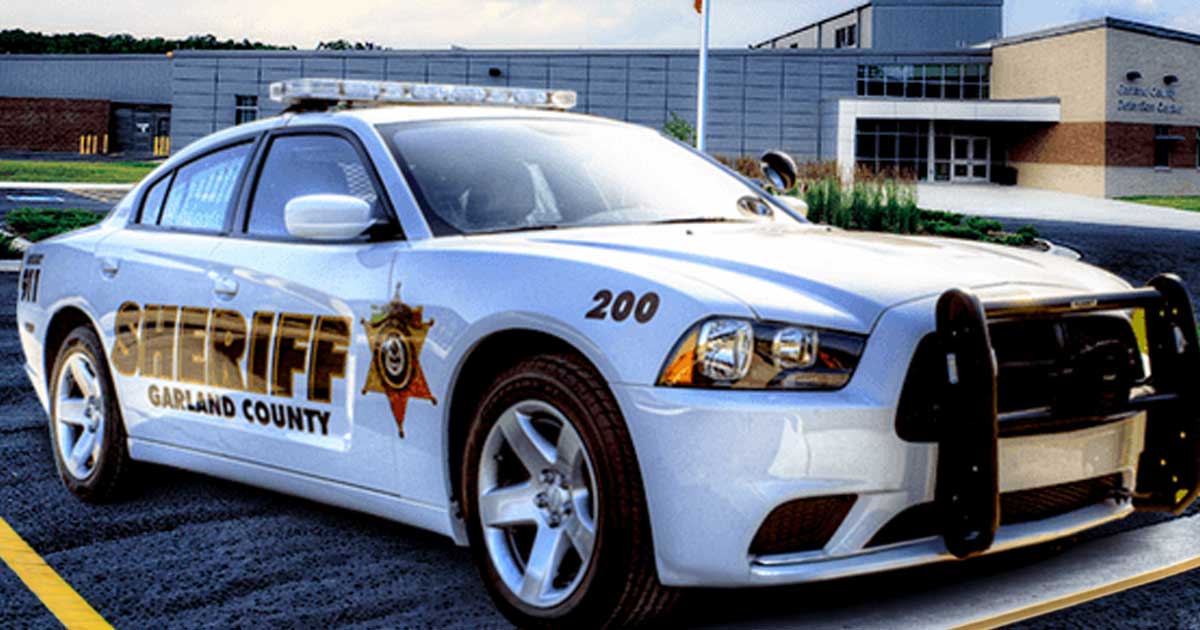
HOT SPRINGS, Ark. — The Garland County Sheriff’s Office just finished hosting the second week of Drug Recognition Expert school, training officers in a method police across the country use to decide whether a driver is high.
The program is a fixture of American traffic enforcement. The science behind it is not settled.
In a Sept. 28 release, the sheriff’s office called DRE training one of the most demanding programs in law enforcement. For decades, though, researchers, judges and defense attorneys have argued over a more basic question: whether an officer’s trained observations can reliably tell when someone is impaired by drugs, and by which ones.
What a DRE does
According to the sheriff’s office, candidates met in Hot Springs from Sept. 21 through Sept. 24 for classroom instruction, then spent two nights doing practical evaluations under the eye of certified instructors. To earn certification, each candidate must complete two weeks of classroom and hands-on training, perform 12 instructor-witnessed drug-influence evaluations and pass a final knowledge exam.
The national program is run by the International Association of Chiefs of Police with support from the National Highway Traffic Safety Administration. In Arkansas, training runs through the University of Arkansas System Criminal Justice Institute in three phases: a pre-school, the DRE school itself and field certification. The state’s highway safety program has said demand for DRE training outpaces the personnel available to teach it.
The evaluation follows a 12-step protocol. A DRE checks pulse and blood pressure, measures pupil size, watches eye movements and runs balance and coordination tests. The officer then forms an opinion on whether the person is impaired and which of seven drug categories is responsible. The full evaluation is often done at a station or jail after an arrest.
The science
The protocol grew out of the Los Angeles Police Department and was adopted nationally in the 1980s. Its main validation studies date to that era: a 1985 Johns Hopkins lab study, a 1986 LAPD field study and a 1994 Arizona study.
Critics say those studies measure the wrong thing. Many count a DRE as correct when toxicology finds a drug in the person’s blood or urine. But the presence of a drug does not prove the person was impaired while driving. Some drugs, including marijuana, can show up days after use.
Even by that lenient measure, the record is mixed. In the 1994 Arizona study, labs found no drug at all in 16.4% of cases where DREs had identified drug impairment.
Marijuana is the weakest link. Field sobriety tests, a core part of the DRE exam, were built and validated around alcohol. In a 2023 double-blind trial published in JAMA Psychiatry, University of California San Diego researchers gave 184 regular cannabis users either real cannabis or a placebo. Officers rated 81% of the THC group as impaired, but also 49% of the placebo group, people who had smoked nothing active.
The researchers concluded the tests could separate the groups at some time points, but may not be reliable enough on their own to establish THC impairment.
What courts have said
Courts are split. The most thorough review came from New Jersey, where the state Supreme Court appointed a special master to study the protocol before ruling in 2023.
In a 5-2 decision in State v. Olenowski, the court held DRE testimony reliable enough to be used as evidence, but limited it. DREs may not testify that a specific drug caused impairment, only that impairment was “consistent with” certain drugs. Testimony must be excluded if police did not attempt a toxicology test, and a DRE’s opinion alone cannot establish guilt.
Two justices, including the chief justice, dissented. They wrote that the studies relied on were methodologically flawed and noted that DREs had judged 78% of people whose toxicology showed no drugs to be drug impaired. The majority itself said it could not determine an overall error rate.
Other courts have gone further. A Maryland circuit court excluded DRE evidence, and a North Carolina appellate court ruled in 2025 that a trial judge erred in admitting a DRE’s testimony in one case. Many other states, including Georgia, generally allow DRE opinions as expert testimony subject to cross-examination.
When the lab disagrees
The clearest public examples of the stakes come from Georgia.
In a 2017 investigation, Atlanta station 11Alive reviewed a year of arrests by one Cobb County officer who was a certified DRE. It found four nearly identical cases where the officer concluded drivers were impaired by marijuana and their blood tests later came back clean. One driver, a restaurant server, spent time in jail before prosecutors dropped her charges months later. The ACLU of Georgia sued the county on behalf of the four drivers.
The problem in Georgia has not gone away, though the newer data covers DUI arrests broadly and not only DRE cases. Records obtained this year by Atlanta’s Channel 2 Action News showed more than 10% of the 6,875 DUI blood samples the Georgia Bureau of Investigation tested in 2025 had no alcohol, illegal drugs or prescription drugs detected.
Those arrests may not show up in national DRE accuracy figures. According to 11Alive, DREs report only full evaluations, so roadside arrests that never get the complete 12-step exam are left out.
The case for the program
Supporters say DREs fill a real gap. There is no breath test for drugs, and a blood test can show a drug is present without showing the driver was impaired at the wheel. A trained officer’s structured evaluation, they argue, is better than an untrained officer’s hunch.
New Jersey’s special master found that when paired with a toxicology report, the protocol’s false positive rate was 3.2%. The state’s attorney general praised the Olenowski ruling as a tool for holding impaired drivers accountable.
The Arkansas picture
The question carries weight in Arkansas, where voters legalized medical marijuana in 2016. Urine tests here can show recent marijuana use, but not how impaired someone was at the time of a stop, a Little Rock police DRE told the Arkansas Times in 2019. In the same story, a medical marijuana advocate criticized the program for resting on the judgment of the arresting officer and the DRE.
The Garland County release says the training will help officers spot drug-impaired drivers and remove them from the road. Left unanswered are questions any DRE program can be measured by: how many evaluations its officers conduct, and how often lab results back up their conclusions.
Alcohol-impaired drivers were involved in crashes that killed 154 people on Arkansas roads in 2024, about one in four of the state’s 603 traffic deaths, according to Arkansas Department of Health data. That number peaked at 183 in 2021. Arrests have moved in the opposite direction. The Arkansas Crime Information Center reported 5,212 driving while intoxicated arrests statewide in 2021, less than half the 11,786 reported in 2009. The Arkansas Highway Safety Office has linked the decline in impaired driving enforcement to manpower shortages, a lack of training, courtroom defense tactics in DWI cases and better-paying off-duty work for officers.
Get the biggest Arkansas stories in your inbox
Breaking news, arrests and court updates from across the state. Free.
Confirmation email required. Powered by Mailchimp.