Three Arkansas families have filed federal lawsuits against xAI, the artificial intelligence company founded by Elon Musk, alleging its Grok chatbot was used to transform ordinary childhood photographs of their daughters — girls ages 10, 9 and 6 — into sexually explicit images and videos, and that the company designed and marketed a product it knew would be used that way.
The suits, filed July 23, July 29 and Aug. 6 by Potts Law Firm — a Houston-based national firm with a Little Rock office, whose lead attorneys on the complaint are licensed in Arkansas — arise from the criminal investigation of a Bentonville photographer arrested in June on more than 200 charges related to AI-generated child sexual abuse material. But the civil cases target the company behind the tool, not the man accused of using it — a legal theory with few precedents anywhere in the country, now in front of Arkansas federal judges.
Arkansas Breaking News has reviewed all three complaints. The first, filed in the Eastern District of Arkansas, is on behalf of a 10-year-old girl identified only as Jane Doe. The second, also in Little Rock, involves a 9-year-old who plays soccer and is a Girl Scout. The third, filed in Fayetteville by the child’s mother, involves a 6-year-old who — in the complaint’s words — likes to roller skate, play with Barbies and do parkour at a ninja gym, and wants to grow up to be “a singer, and a teacher, and a mom.”
All three complaints follow the same template: professional photographs of a real Arkansas child were allegedly fed into Grok, which generated sexually explicit images and videos over a period of weeks, alongside what the filings describe as thousands of images of “other local children.”
‘The family thought that was it’
According to the complaint, Jane Doe’s parents hired a well-known Bentonville photographer in spring 2026 to take family portraits of their daughter. “The family thought that was it,” the filing states.
On June 10, the complaint says, local police contacted the parents with a warning: photographs of their daughter had been fed into Grok, which had allegedly generated and disseminated sexually explicit images and videos using the real portraits as source material, beginning around April 22. The complaint alleges the process continued for roughly seven weeks — hundreds, “if not thousands,” of images and videos — before the family learned any of it existed.
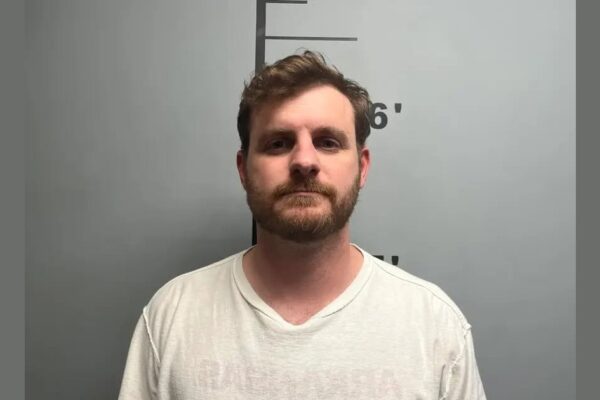
The lawsuit does not name the photographer. But Potts Law Firm has publicly connected all three suits to the criminal case against Russell Bloodworth III, 43, who owns Russell Bloodworth Photography and was arrested June 10 after Bentonville police received a cyber tip two days earlier. According to a probable cause affidavit described in court records and prior reporting, investigators found roughly 1,700 apparent child sexual abuse images and videos and concluded Bloodworth had likely been converting professional photos of juvenile clients using AI image and video generators. His clients included Northwest Arkansas families, schools and camps.
Bloodworth pleaded not guilty July 20 to upgraded charges — 100 counts of pandering or possessing sexually explicit material involving a child, 100 counts of unlawful creation or distribution of deepfake visual material, and one count of engaging children in sexually explicit conduct. He is free on $350,000 bond with home monitoring. His next hearing is set for Sept. 21 in Benton County Circuit Court.
Notably, the tip that launched the investigation came from X itself — the same corporate family now being sued.
A product liability case, not a platform case
The complaint’s central argument is that Grok is not a neutral platform hosting someone else’s content but a product that manufactured the illegal material itself.
“Defendants’ Grok did not merely tolerate this. Grok was built to allow for this,” the complaint alleges, asserting that every other major AI image provider refuses to generate sexual content of real people. The filing points to Grok’s “Spicy Mode,” which the complaint describes as a feature “specifically designed to generate sexually explicit material” and marketed as a competitive advantage — including in a November 2025 post from Grok’s own account instructing users how to enable it.
The suit brings 14 counts, spanning federal law — including Masha’s Law, which provides victims of child sexual abuse material at least $150,000 in liquidated damages per violation — and a stack of Arkansas statutes and common-law claims.
The most consequential may be the least known: Arkansas’s Sexually Explicit Digital Forgery Act. A companion provision, Ark. Code Ann. § 16-118-119(b), creates a private civil action against “the provider or developer of the image-generation technology used to create the deepfake visual material.” In other words, Arkansas law expressly allows a deepfake victim to sue the AI company — not just the person who typed the prompt. These cases appear to be among the first major tests of that provision against a frontier AI developer.
The complaint also invokes Arkansas’s Vulnerable Victim Civil Remedy, the Frank Broyles Publicity Rights Protection Act, the state Deceptive Trade Practices Act and the Arkansas Product Liability Act, along with strict liability, negligence and privacy claims.
What the numbers in the complaint say
The filing cites a Center for Countering Digital Hate analysis of images produced by Grok between Dec. 29, 2025 and Jan. 8, 2026. Extrapolating from a 200,000-image sample of 4.6 million images, the group estimated Grok generated roughly 3 million sexualized images in less than two weeks — including about 23,000 that appeared to depict children.
By late January, 35 state attorneys general had signed a formal letter to xAI — attached to the complaint as Exhibit A — warning that Grok “merits special attention” because it both facilitated the production of nonconsensual intimate images and “made it all as easy as the click of a button.” The letter states that Grok “has even altered images of children to depict them in minimal clothing and sexual situations.”
Arkansas Attorney General Tim Griffin is not among the 35 signatories. [ABN has requested comment from the attorney general’s office on why Arkansas did not join the letter and whether the office has a position on the pending litigation.]
The complaint also alleges a corporate detail with implications beyond this case: that x.AI Holdings LLC — the parent above both xAI and X Corp — has been a wholly owned subsidiary of SpaceX Corp. since Feb. 2, 2026.
What the families want
The Jane Doe complaint seeks compensatory and punitive damages, statutory damages of at least $150,000 per violation, and a permanent injunction requiring xAI to identify and delete every copy of the material, pursue its removal from downstream platforms, and implement technical safeguards — such as filtering and abuse detection — sufficient to prevent Grok from generating sexually explicit depictions of identifiable real people.
Given the complaint’s allegation of hundreds or thousands of individual images across three suits, the statutory exposure alone could reach well into nine figures before any punitive award.
“It is deeply disappointing that we are now filing a third lawsuit involving these allegations, and we expect additional families to come forward,” Derek Potts, the firm’s national managing partner, said in an Aug. 7 statement announcing the third suit.
What happens next
The first two cases, filed in the Eastern District of Arkansas in Little Rock, are assigned to U.S. District Judge Lee Rudofsky, a former Arkansas solicitor general. The third was filed in the Western District of Arkansas in Fayetteville before Judge Timothy Brooks.
xAI has not yet responded to the complaints in court. The company is expected to raise significant defenses, likely including Section 230 of the Communications Decency Act — the federal law shielding platforms from liability for third-party content — along with arguments that the photographer’s alleged criminal conduct, not the software, caused the harm. The plaintiffs’ filings are structured to counter both: the complaint argues Grok’s output is the company’s own product, not third-party content, and cites federal appellate decisions holding that “morphed” child sexual abuse imagery of identifiable, real minors is not protected speech.
Whatever the outcome, the cases put Arkansas courts — and an Arkansas statute — at the center of one of the most consequential open questions in technology law: whether the company that builds a generative AI system can be held liable when that system is used to harm a child.
Get the biggest Arkansas stories in your inbox
Breaking news, arrests and court updates from across the state. Free.
Confirmation email required. Powered by Mailchimp.