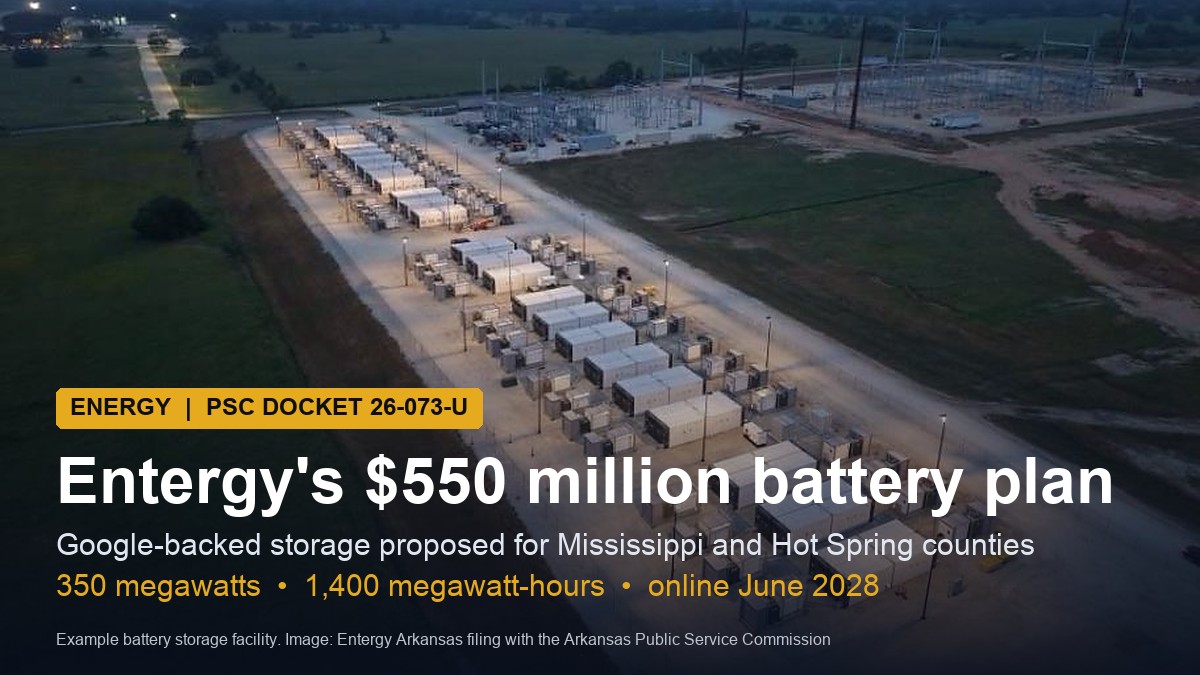
LITTLE ROCK — Entergy Arkansas asked state regulators Thursday for permission to build two large battery storage plants, at an estimated $550.6 million, to help power the expansion of Google’s data center in West Memphis.
The utility says Google will cover the plants’ costs through its power contract, and that other customers will see no bill increase. Entergy is not asking to charge customers for the batteries while they are being built, a contrast with the Google-linked solar project that has drawn fire in the Legislature.
The application, filed with the Arkansas Public Service Commission in Docket 26-073-U, starts a 180-day clock under state law. That would put a decision due by late April 2027.
What Entergy wants to build
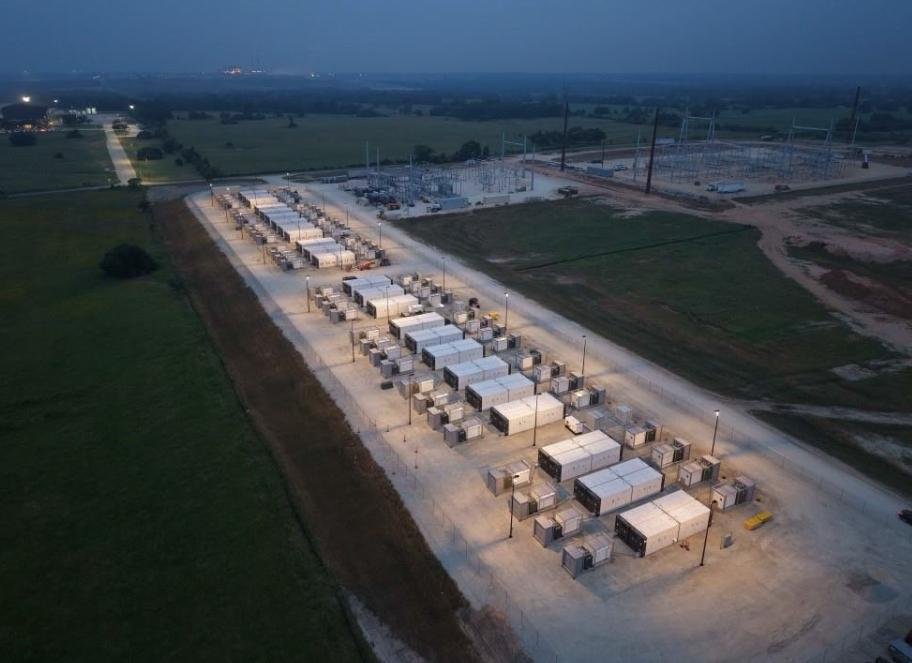
- Driver battery, Mississippi County: 250 megawatts, able to run at full output for four hours, or 1,000 megawatt-hours. It would sit at Entergy’s Driver Solar plant near Osceola, on about 10 acres. Estimated cost: $389.4 million.
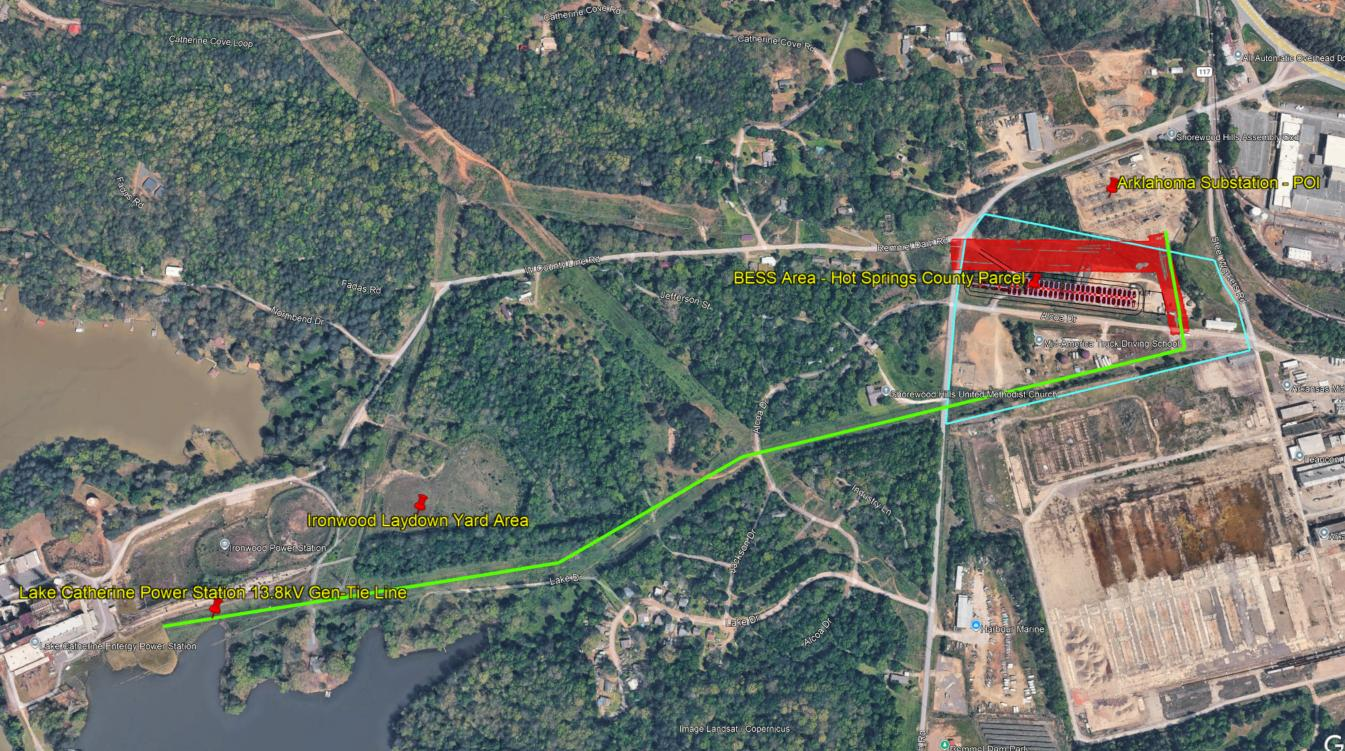
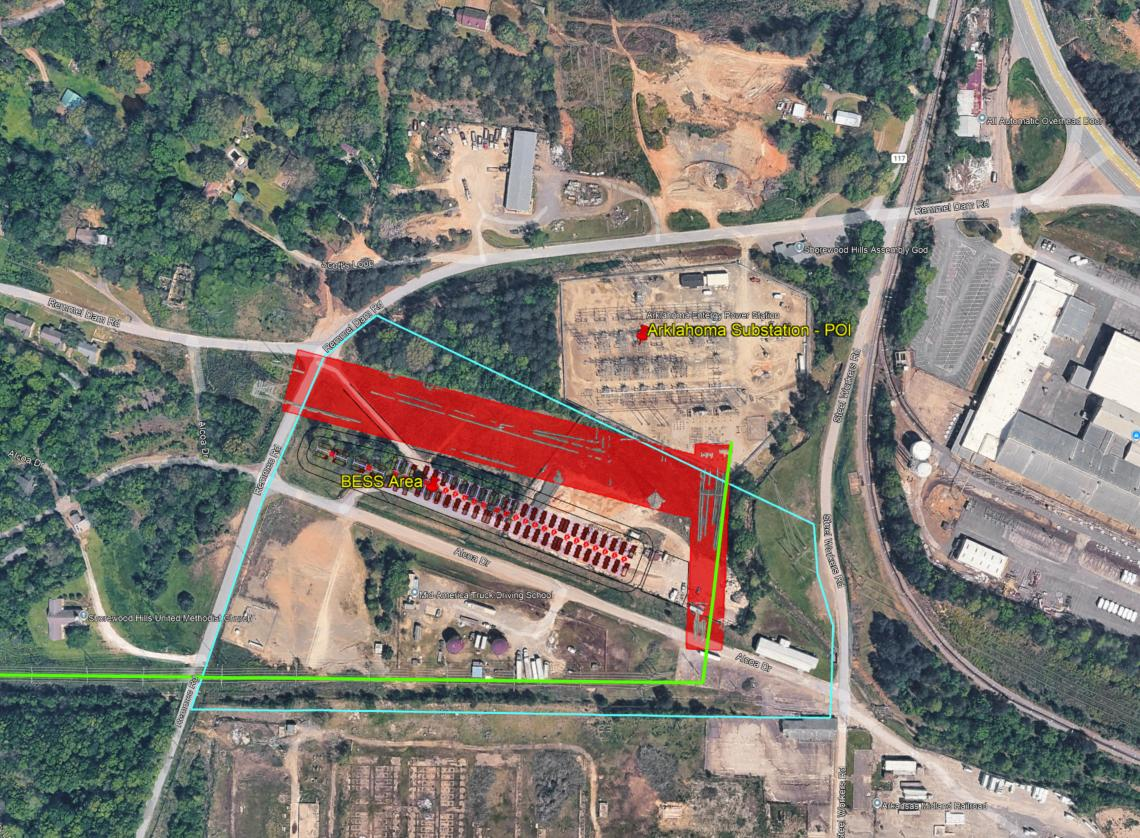
- Jones Mill battery, Hot Spring County: 100 megawatts, or 400 megawatt-hours. It would go on a brownfield site next to the Arklahoma substation near Entergy’s Lake Catherine plant, where the utility is building its Ironwood Power Station. Estimated cost: $161.2 million.
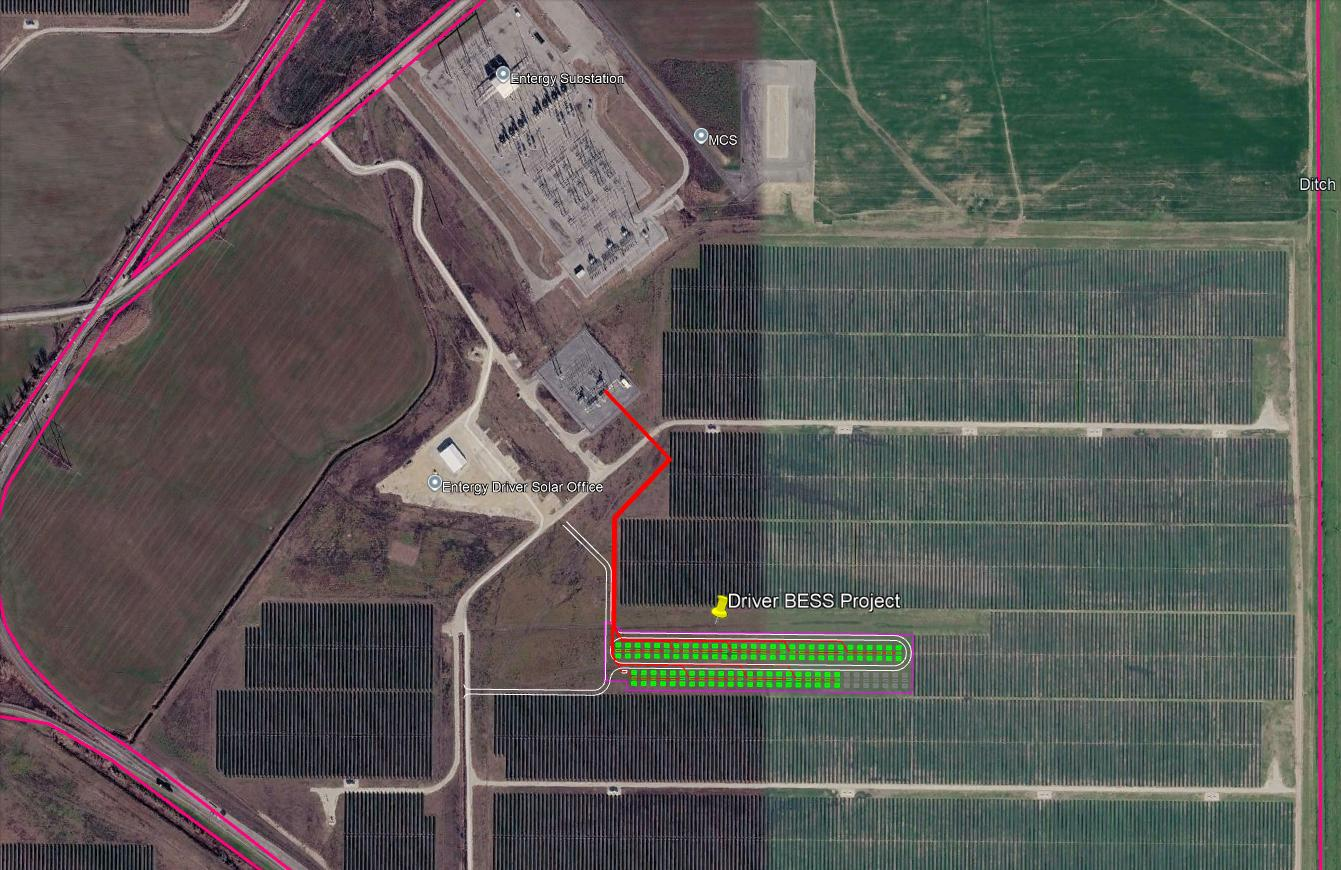
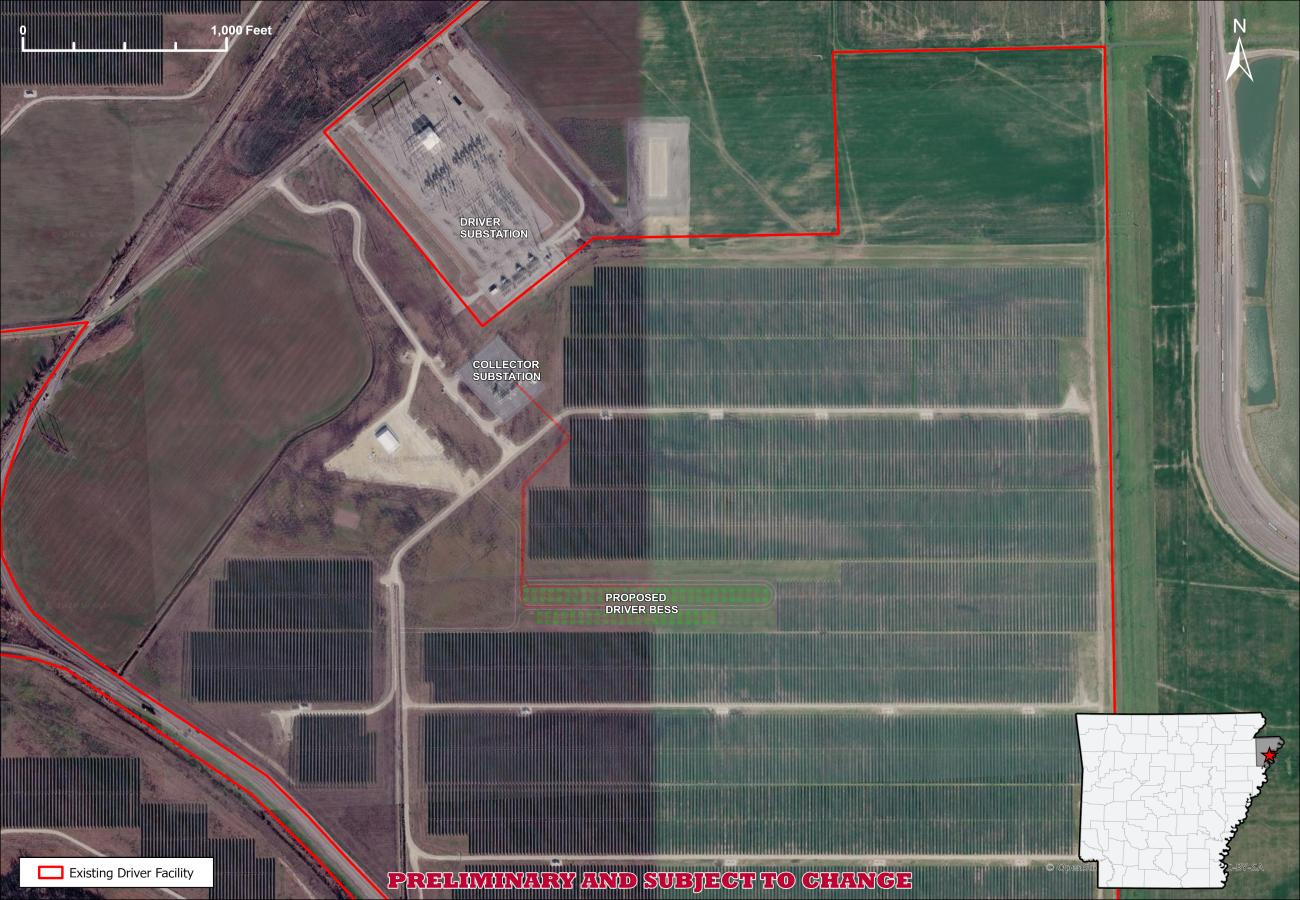
Both are scheduled to start running June 1, 2028. Construction would run from spring 2027 to spring 2028, and Entergy plans to buy the battery equipment starting this quarter. Wanzek is the planned engineering, procurement and construction contractor. The battery supplier’s name is sealed.
Batteries store power when it is cheap, often from solar plants at midday, and release it during peak demand. Entergy says each project is expected to qualify for a 40% federal investment tax credit.
Article continues below
▼ Continue reading
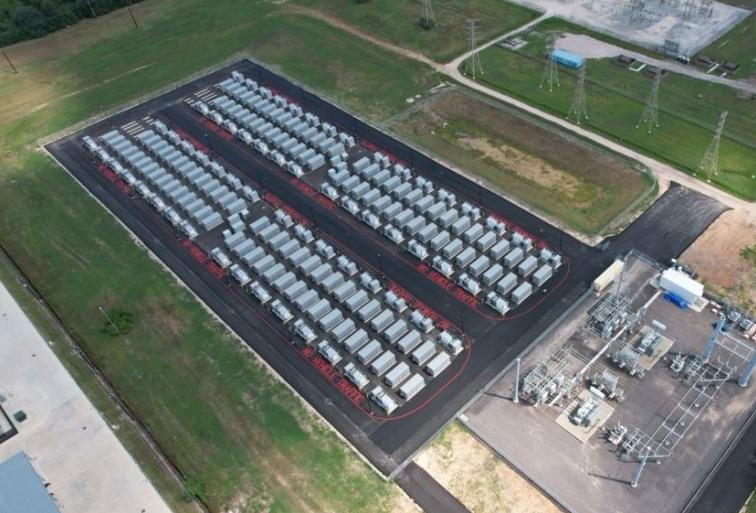
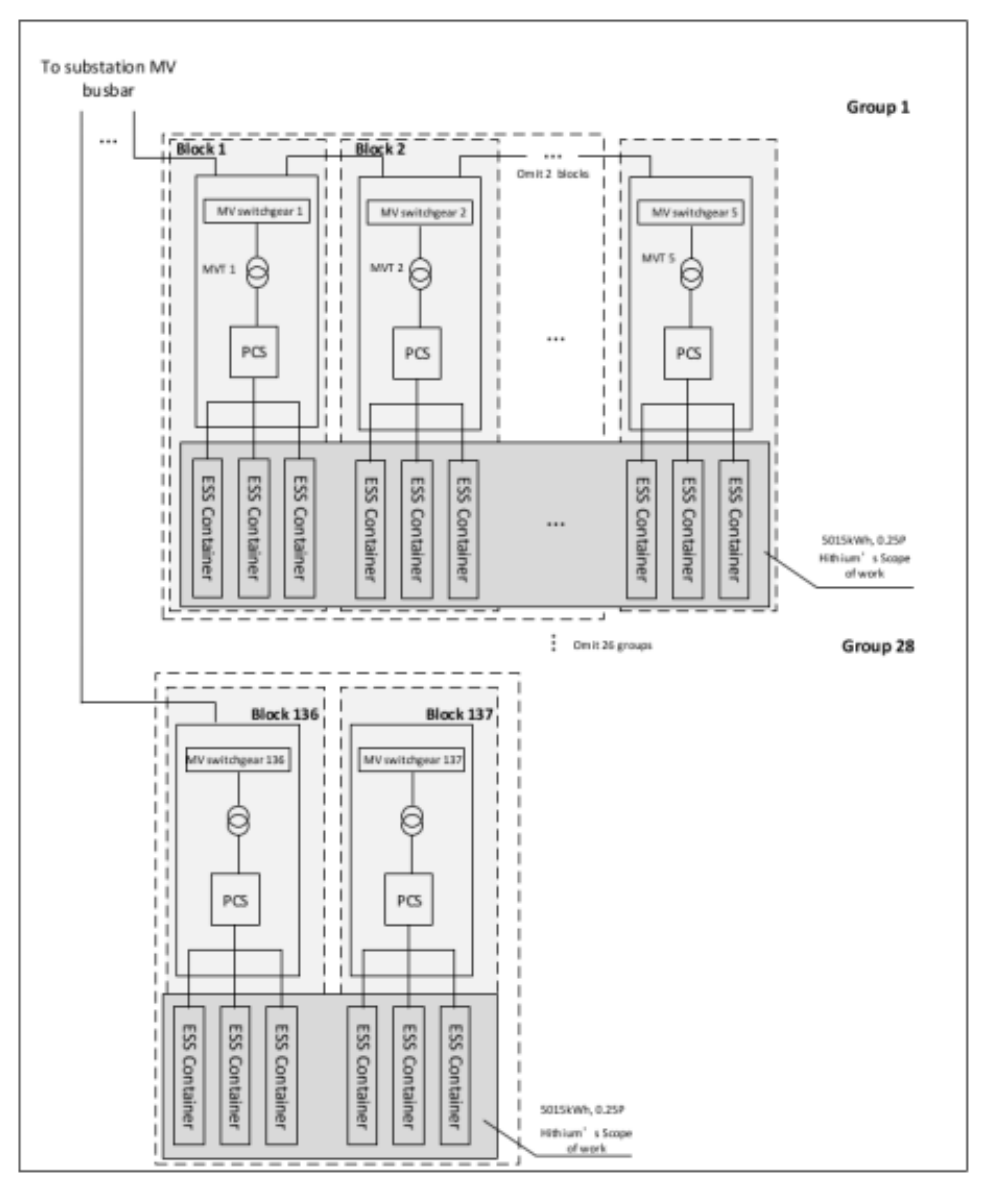
Both sites reuse grid connections Entergy already has. At Driver, the battery uses spare capacity at the solar plant’s hookup. At Jones Mill, it takes over interconnection rights from Lake Catherine Unit 4, which Entergy plans to retire at the end of 2027. That lets the projects skip the regional grid operator’s yearslong interconnection queue, Entergy said.
Who pays
Google has agreed to cover the financing costs during construction through up-front payments. It would also pay rates high enough to cover the plants’ full cost for the length of its contract, according to testimony from Kristin Dalrymple, Entergy Arkansas’ vice president of business operations and strategy. Google’s customer on the contract is Altitude Capital LLC, a subsidiary of Google parent Alphabet Inc.
Entergy says that makes the batteries “effectively … no-cost resources for all other customers.” David Hunt, finance director for Entergy Arkansas, estimated the batteries would cut a typical household’s bill by 4 cents a month in their first full year, 2029, by lowering fuel costs.
Even without Google’s money, the company says, the batteries would deliver about $561 million in net benefits to customers through 2048, compared with other ways of getting the same power. The batteries were picked from Entergy’s 2025 request for proposals. That solicitation drew conforming bids from 17 bidders covering thousands of megawatts of solar, wind and storage, according to testimony from Wyatt Ellertson, an Entergy supply planning manager. An independent monitor, Accion Group, oversaw the process. Its report is sealed.
If construction costs exceed estimates, the amended Google contract includes true-up provisions to cover the actual costs, Dalrymple testified. Entergy said in its earlier Google filing that the company’s rates would rise to cover overruns of up to 30%.
The batteries are expected to last about 20 years, roughly the length of Google’s 20-year contract. Entergy proposed depreciating them at 5% a year.
Much of the supporting detail is filed under seal, including Entergy’s cost models, the contract terms, the independent monitor’s report and parts of the testimony. The commission, its staff and the attorney general’s office can see the sealed material.
Why not the jobs-act charge
The 2025 Generating Arkansas Jobs Act, Act 373, lets Entergy charge customers a return on new power plants built for economic development while they are still under construction. That charge shows up on bills now, and it is part of how customers are paying for Cypress Solar, the $1.6 billion solar-and-battery plant being built largely for Google.
Entergy is not using the rider for the batteries. Instead, it wants the costs, offset by Google’s revenue, to go through its regular annual formula rate plan.
Hunt explained in testimony that the rider’s main feature is collecting financing costs during construction. Because Google is already covering those costs, he said, “customers are indifferent” and the rider isn’t needed. Entergy made the same point when it announced the expansion Oct. 19, saying the new resources “will not be charged through” the rider.
The law has become a target at the Capitol. At an Oct. 19 Joint Energy Committee hearing, the commission’s chief of staff said the way Entergy and Google structured Google’s Cypress Solar payments would cost other customers about $300 million over the plant’s life. Entergy disputed that figure. Sen. Jimmy Hickey, R-Texarkana, who voted for the law, apologized for that vote. He has said he and other senators will try to repeal it when the Legislature meets in January.
Part of a bigger package
The batteries are one piece of what Entergy and Google call the second phase of their partnership. Google is expanding its West Memphis campus, which it announced in October 2025 as a $4 billion project.
Entergy filed a rewritten power contract with Google on Oct. 19. That contract would raise the maximum amount of power the data center can use and let it ramp up faster. The amount is sealed. The package also includes an expanded Galet substation near West Memphis and two new 230-kilovolt transmission lines. It also has Google buying the clean-energy credits from the Big Island Solar project in Mississippi County. Entergy has put the planned investment Google would cover at about $600 million.
The commission has set a Jan. 4 hearing on the amended contract.
Entergy said the batteries will serve all its customers, not just Google. “While the Projects are a key component of the supply solution needed to serve Google’s project expansion, they will be used to serve all customers,” Dalrymple said. They add 350 megawatts of power that can be called on when needed. Ellertson said that cuts Entergy’s exposure to high prices in the regional capacity market as supply tightens.
Construction would create about 50 temporary jobs at Driver and 25 at Jones Mill, according to Michael Goin, Entergy’s vice president of power development for clean generation. He estimated the Driver project would generate $1.9 million in property tax and $13.5 million in sales tax. Jones Mill would generate about $6 million in sales tax and a similar amount in property tax, he said.
The commission’s staff, the attorney general and other parties will now review the application and file testimony before a hearing. No schedule had been set as of Thursday.
The application and public testimony are available in Docket 26-073-U on the commission’s website.
Get the biggest Arkansas stories in your inbox
Breaking news, arrests and court updates from across the state. Free.
Confirmation email required. Powered by Mailchimp.


Comments
No comments yet.
Members only
Comments are for members
Members can comment on every story and reply to each other. Join at any level, from $5 a month.
Become a member Already a member? Sign in