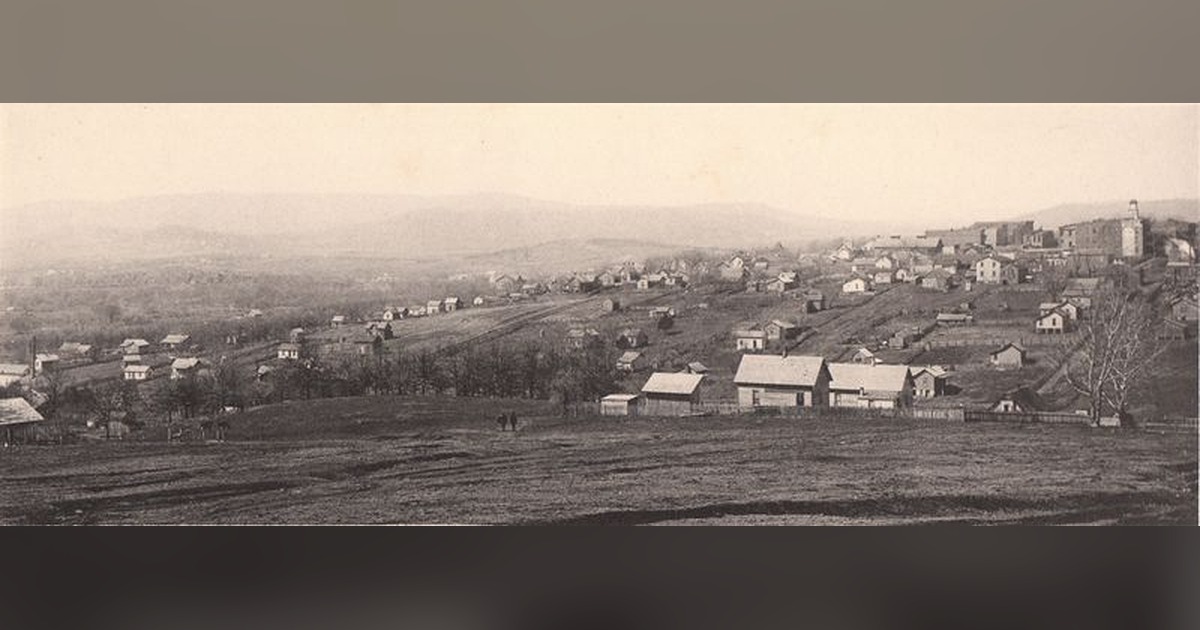
FAYETTEVILLE — About 1 o’clock on the afternoon of Saturday, Nov. 8, 1845, 100 militiamen marched an aging farm couple out of the Washington County jail and through a crowd of 3,000 to 4,000 people to a gallows on a hill south of the Fayetteville square, where another 100 armed men were waiting. Soon after 2:30 the drop fell. Lavinia Burnett had become the first woman legally executed in Arkansas, and her husband, Crawford Burnett, had died beside her. Seven weeks later their son climbed the same scaffold.
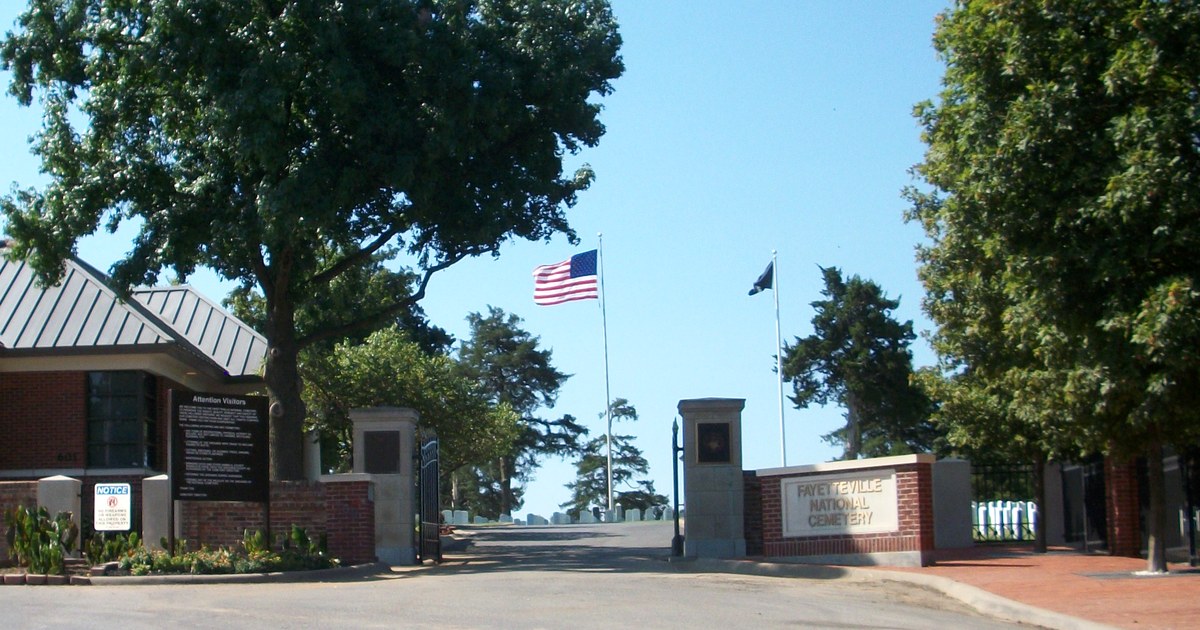
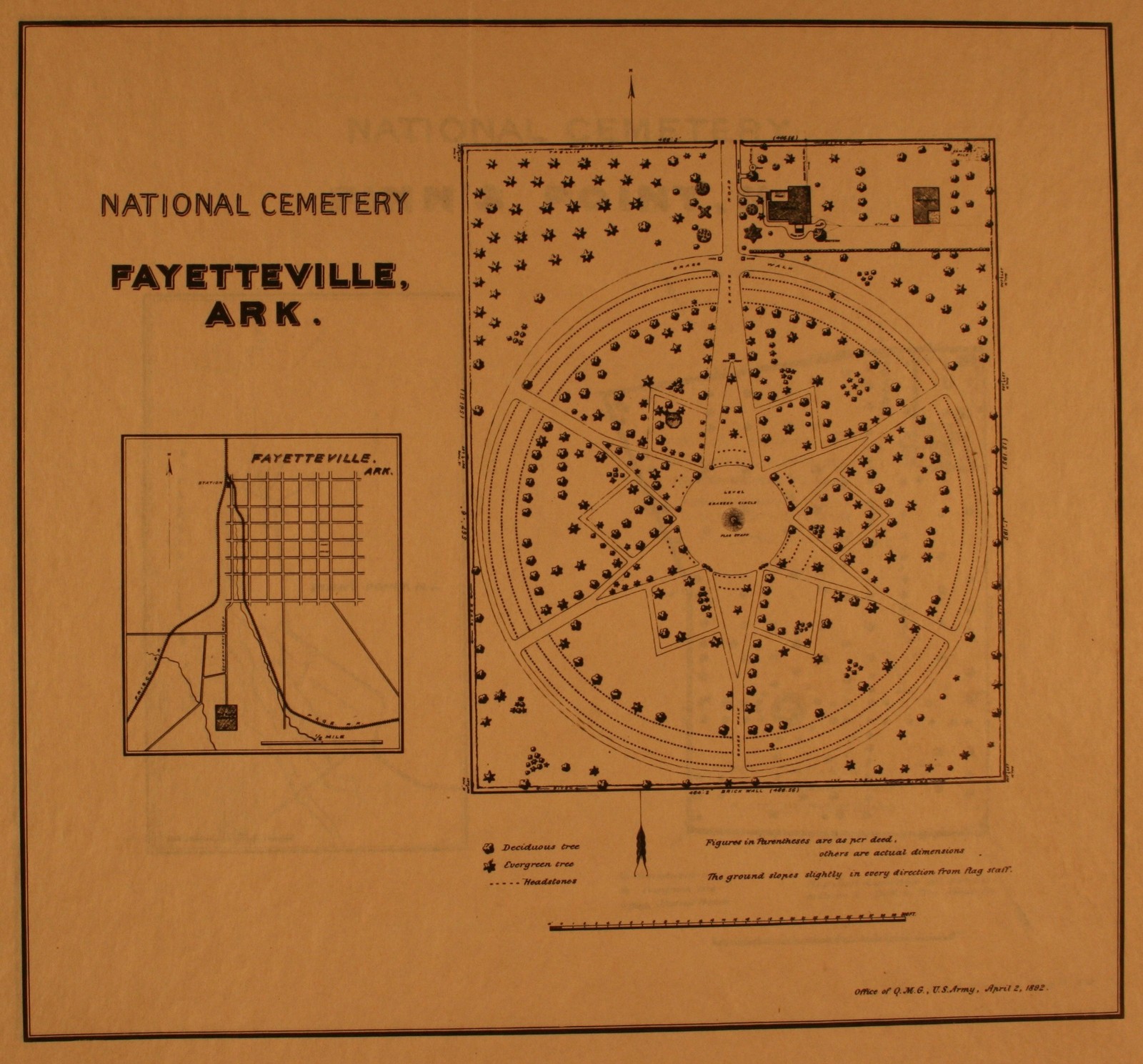
The hill is now Fayetteville National Cemetery, according to local historians. Sunday marks 181 years since the double hanging, and for the next 155 years it stood as the only time Arkansas had executed a woman.
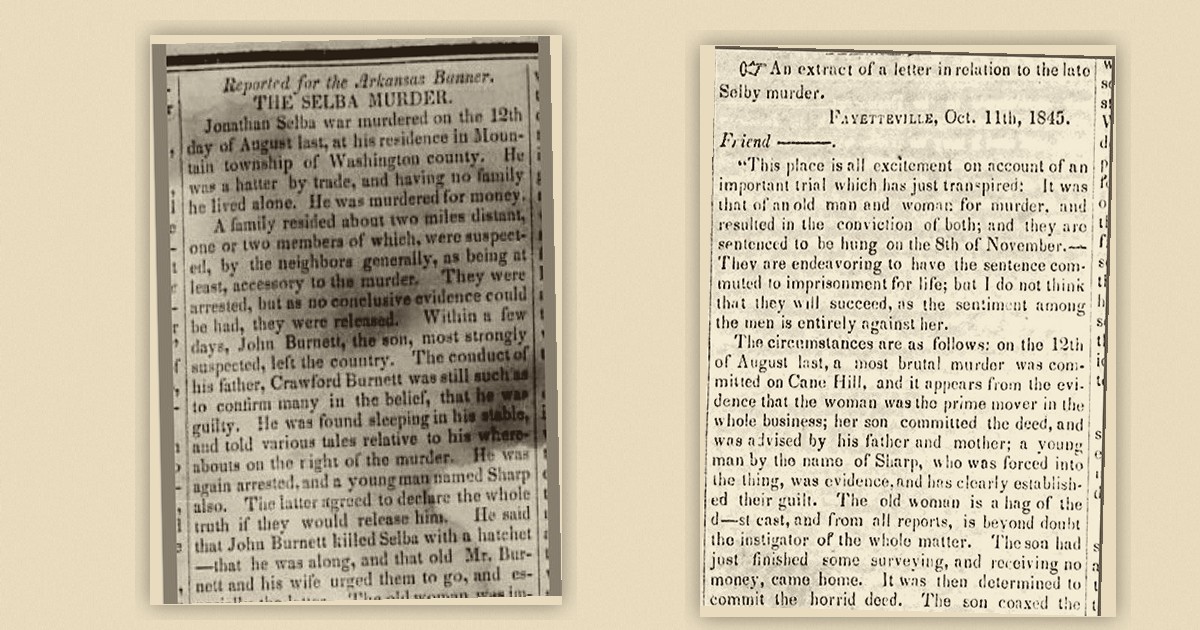
Three Arkansas newspapers covered the case in 1845, and the Encyclopedia of Arkansas has posted scans of all three. Read together with the 1889 Goodspeed history of the county, they give a fuller and in places different account than the one that has been repeated for decades.
A hatter found dead near Cane Hill
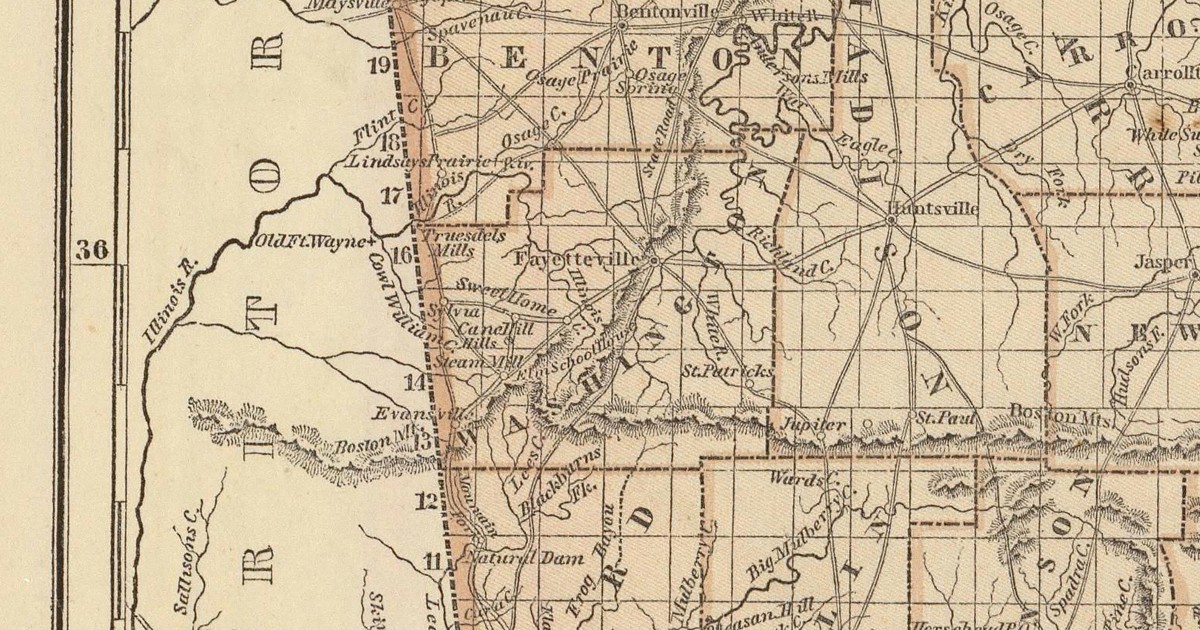
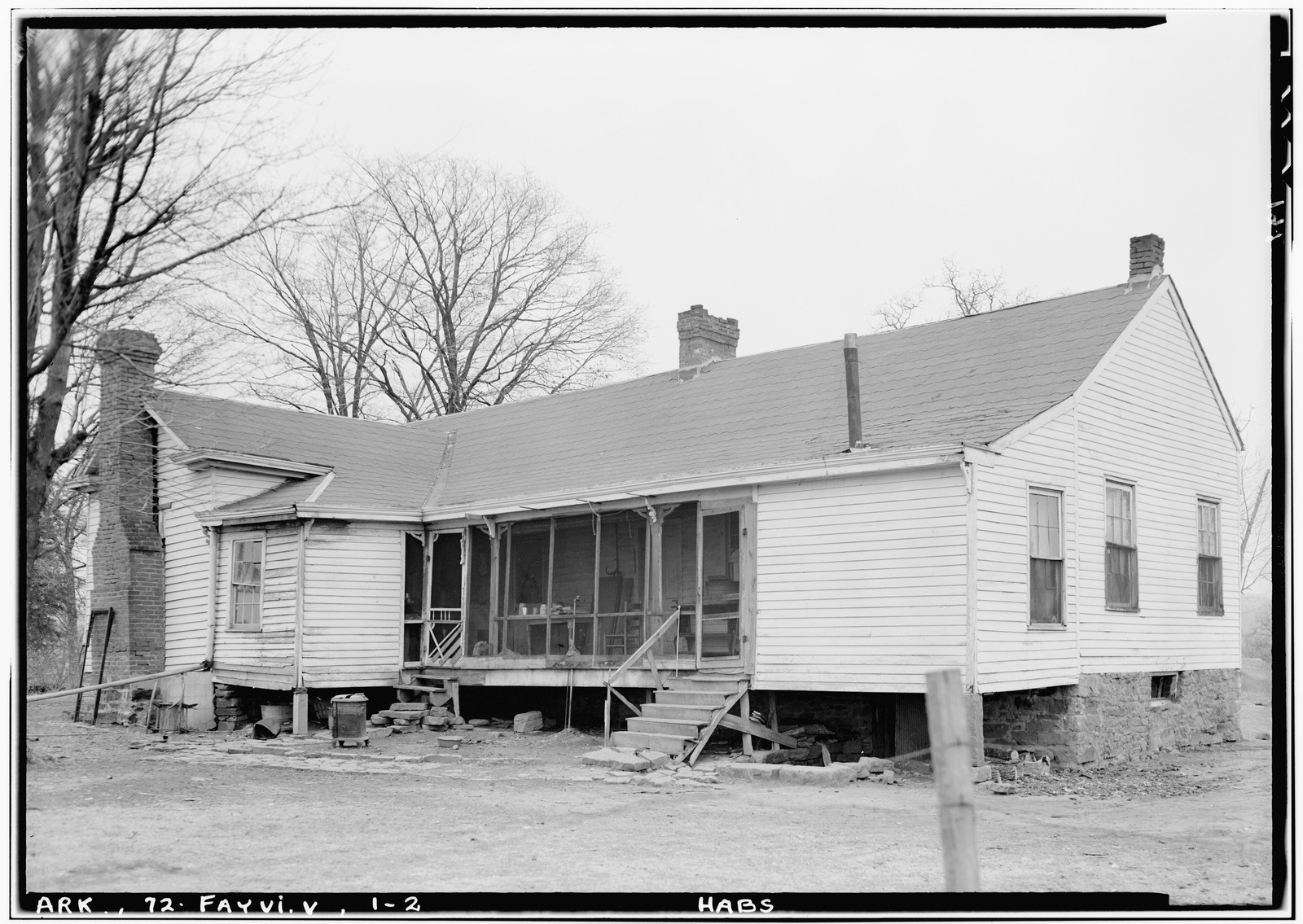
Jonathan Selby, whose name the papers also spelled Selba, was a hatter by trade who lived alone in Mountain Township, near Cane Hill, the oldest settlement in Washington County. He was about 40, had no family and was known to keep cash at home. On the morning of Aug. 12, 1845, a neighbor found him dead with “his head literally chopped to pieces,” according to the Encyclopedia of Arkansas. “He was murdered for money,” the Arkansas Banner wrote.
Suspicion fell on a family that lived about two miles away. Crawford and Lavinia Burnett were arrested, then released because, as the Banner put it, “no conclusive evidence could be had.” Within a few days their son John, the man most strongly suspected, left the country. His father was found sleeping in his stable and “told various tales relative to his whereabouts on the night of the murder.” Crawford Burnett was arrested again, and this time so was a young relative of the family named Harden Sharp.
Article continues below
▼ Continue reading
Sharp “agreed to declare the whole truth if they would release him.” He said John Burnett had killed Selby with a hatchet, that he had been along, and that “old Mr. Burnett and his wife urged them to go, and especially the latter.” Lavinia Burnett was arrested the same day, and the couple was held for trial.
Ozarks historian Larry Wood writes that Crawford Burnett and Lavinia Sharp married in Patrick County, Virginia, on Dec. 29, 1810, raised a large family in Kentucky and reached northwest Arkansas sometime before 1845. Lavinia was about 60.
What the witness said happened
Sharp’s sworn testimony survives because the Arkansas Gazette printed it in full that December. Late in the summer, he said, he went to the Burnett place to look at a piece of corn, and “old Mrs. Burnett persuaded (him) to stay because she felt like she was going to have fits.” John Burnett came home from a surveying job that evening with no money and debts for goods he had taken on credit in Van Buren. He said he knew how to get money. He had worked for Selby, had watched him count out $500 and put it in a pocketbook, and he meant to kill him.
Sharp said he refused. John offered him a colt, then $50, then half of the $500. “The old woman then spoke and said W. was a fool if he did not go, it was more than he could make in a year at work,” the Gazette’s account reads, using “W.” for the witness. Crawford Burnett, he said, promised to “keep secret and be a witness for us,” and told him he “might as well go along.”
That night John Burnett picked up a tomahawk he said he had stolen along the creek, and the two walked to Selby’s. Sharp stopped at the gate. From inside the house he “heard licks and something like groans and strangling,” and the dogs broke out barking. John broke open a trunk and had Sharp reach in for the pocketbook. On the way out, Sharp testified, John said, “Damn you, I reckon you will not trade away any more cattle.” John threw the tomahawk away, burned his shirt in the kitchen, washed his pants in the creek, and his sister Minerva “came by W. with something white,” a clean shirt. When John opened the pocketbook by the kitchen door it held $50.
The next morning, Sharp said, Crawford Burnett asked him whether John had really killed Selby, then told him to keep it secret because John would kill him if he talked. John found him at work that noon and said the same thing: he “was better than an Indian, and if W. told it in company he would jump at him and cut his damned throat.”
“The sentiment among the men is entirely against her”
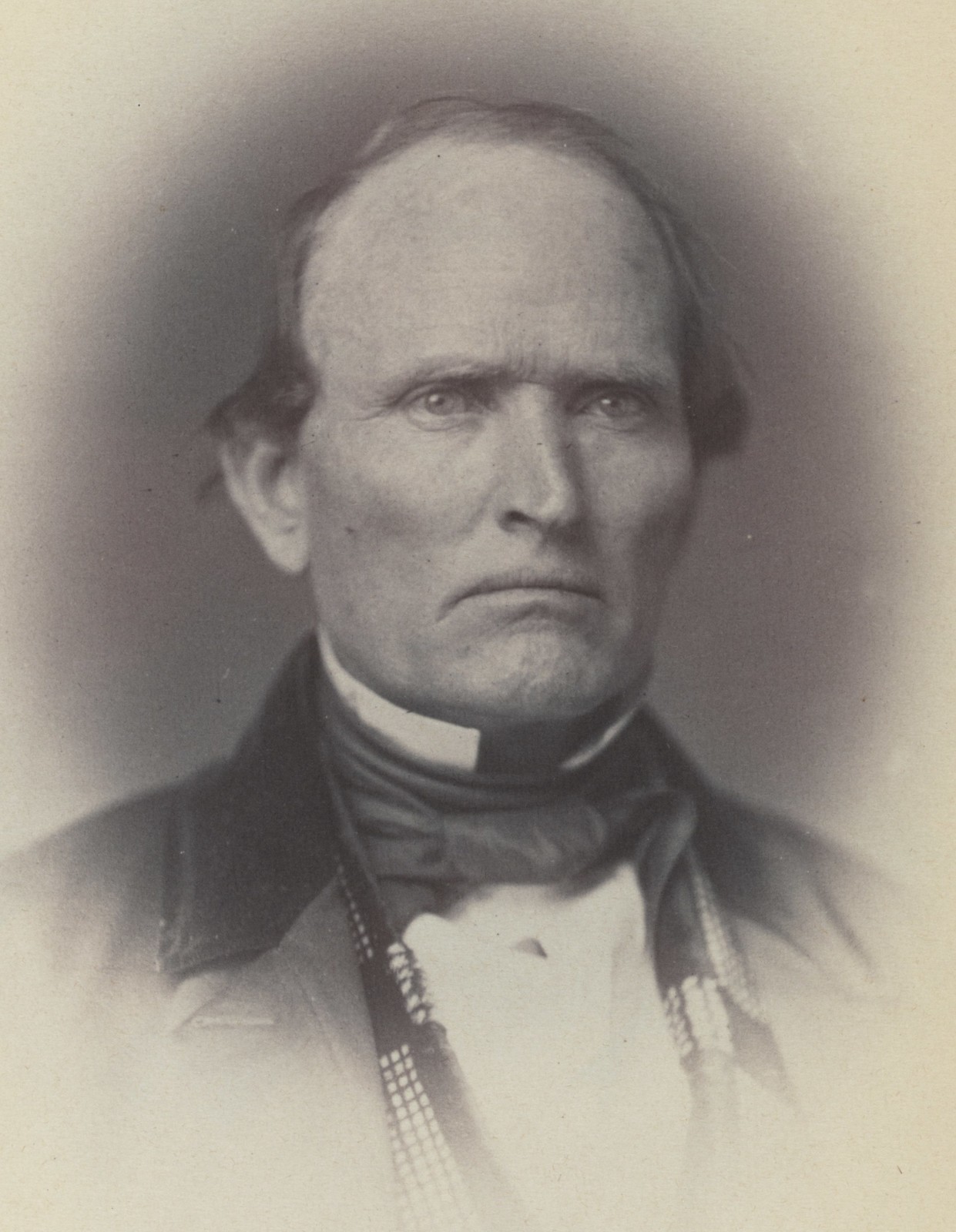
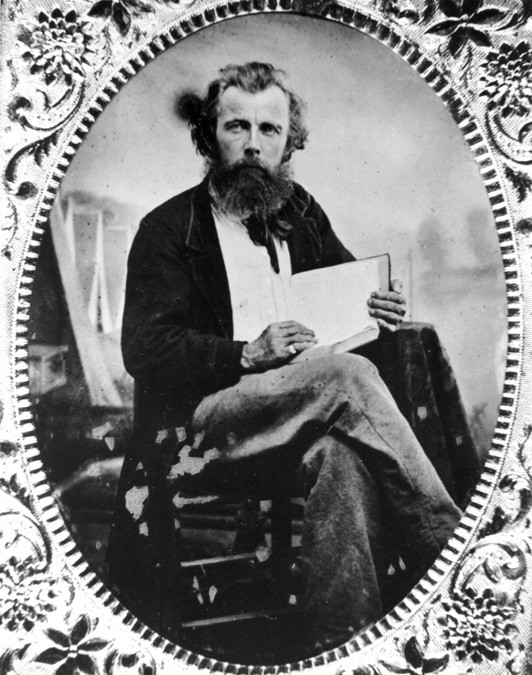
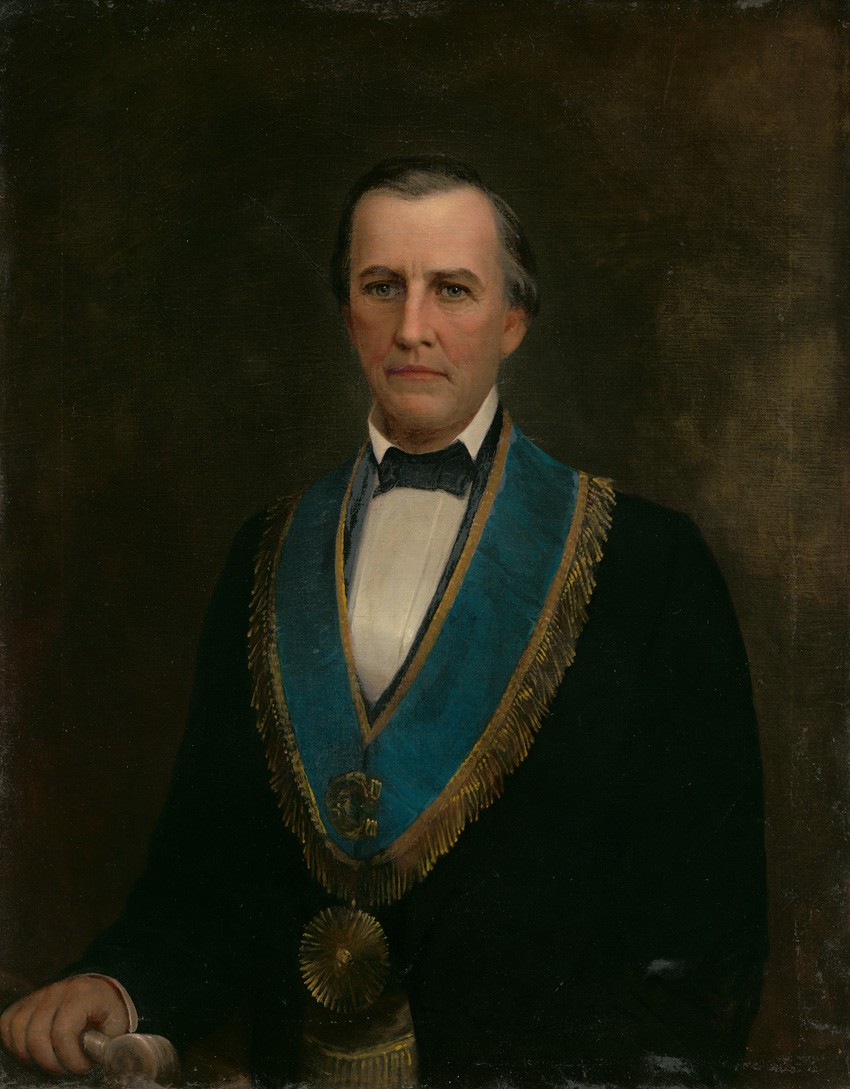
A special term of circuit court was called in October to try the couple before Judge Sebron Sneed. The prosecutor was A.B. Greenwood, who later represented northwest Arkansas in Congress. The judge appointed Isaac Strain and James P. Neal to defend the Burnetts, and a third lawyer volunteered: Isaac Murphy, a Fayetteville schoolteacher and surveyor who practiced law on the side. Sixteen years later Murphy would be the lone delegate who refused to change his vote against secession, and in 1864 he became the first elected governor of Union-controlled Arkansas.
Husband and wife were tried separately, and the trials were short. Sharp testified, and so did the couple’s daughter, a girl of about 15 whom the Gazette called Minerva and the Encyclopedia of Arkansas calls Mary Jane. The Gazette later said her account “corresponds substantially, in every respect, with that of Sharp’s.” The encyclopedia’s account, drawn from the same papers, has her “weeping, sobbing and with much excitement” as she told jurors she had washed her brother’s bloody clothes.
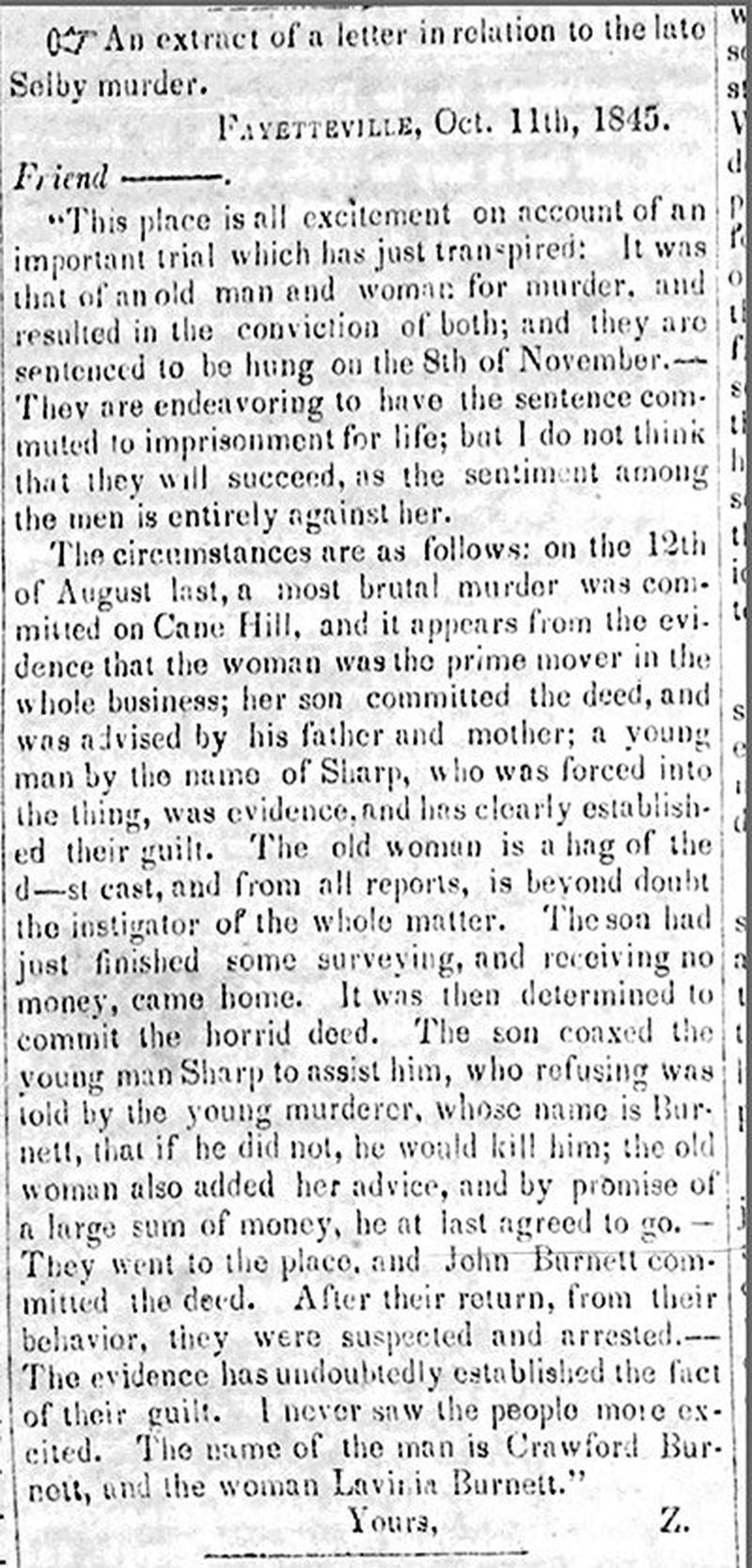
By Oct. 11 both parents had been convicted as accessories to the murder and sentenced to hang on Nov. 8. “This place is all excitement,” a Fayetteville correspondent wrote the Van Buren Arkansas Intelligencer that day. Friends were “endeavoring to have the sentence commuted to imprisonment for life; but I do not think they will succeed, as the sentiment among the men is entirely against her.” The writer called Lavinia Burnett “a hag of the d—st cast, and from all reports, is beyond doubt the instigator of the whole matter.” Another observer described her as “a stout hearty woman with the appearance of an Amazon.”
Sneed’s sentence, taken down in shorthand and printed in the Banner, ran to several hundred words. “You not only consented that your victim should die for the sake of a few dollars,” he told her, “but you urged your own child, the offspring of your own body, to commit the foul deed, and to dip his hands in human gore.” Then: “Miserable woman! You have not only hurried your fellow being, Selba, into the spirit-world, but you have also ruined your husband, your son, and yourself; and plunged your whole family into the direst calamity and distress.”
“You have but a few days to live!” he went on. “Let me entreat you not to entertain a single hope of Executive clemency.” She was to be hanged between noon and 3 p.m. on Nov. 8, “by the neck till you are dead! And may Almighty God have mercy on your Soul!”
Papers as far away as Philadelphia and Vicksburg, Mississippi, carried the news. The Vicksburg Daily Whig ran it under the headline “An Old Man and Woman to be Hanged.”
Gallows Hill
Arkansas did not move executions behind walls until 1887, and this one drew what the Goodspeed history described as “almost the entire county.” An eyewitness who wrote up the day for the Arkansas Banner two days later counted “some 3000 or 4000 persons.” The prisoners were brought out about 1 p.m. under a guard of 100 men commanded by a militia general named Wood; 100 more under a Gen. Newton were already posted at the gallows. “It is certainly due to the officers and men, to say that every thing was conducted with perfect order and decorum,” the witness wrote. “The scene was grand, imposing, and awful.”
The gallows stood on the rise at the south end of what is now Lt. Col. Leroy Pond Avenue, a spot Fayetteville called Gallows Hill for the next generation. Both Burnetts “denied any knowledge of the murder to the last breath,” the witness wrote, though “no one doubted the guilt of the prisoners.” In jail Lavinia Burnett had “embraced the Roman Catholic faith, and died believing, as she said, that she would be saved. The old man remained stubborn to the last, saying that he was as good as any man.”
At 2:30 p.m. Sheriff Elijah O’Bryan, with Gen. Wood assisting, led them up the scaffold. Another account quoted by the encyclopedia says “the old man reached out and took his wife by the hand and indicated that he was ready.” The ropes were adjusted and caps drawn over their faces. “The Sheriff cut the rope, the drop fell, and the two poor, miserable and guilty victims hung between heaven and earth as fit for neither,” the Banner’s witness wrote. “This is the first legal execution which ever took place in Washington county.” The county’s own roll of early sheriffs still records it that way under O’Bryan’s name.
The son, already in the jail
John Burnett watched none of it, but he was closer than most accounts suggest. After his parents’ trial, search parties rode to Texas, where an uncle lived, and to Missouri. A Washington County man named Moses Cook found him in Saline County, Missouri, and brought him back. By Nov. 10, two days after the hanging, the Banner’s correspondent could report that the son “has been brought back and committed to the Fayetteville jail, since the trial of the old people,” and was waiting for the next regular term of court.
That trial came in early December and took two days before a packed courtroom, with most of the same witnesses, his sister among them. Murphy defended him again, this time with A.M. Wilson. Goodspeed’s history says both lawyers believed their client was innocent “and did all in their power to save him, but, in the face of the two prior convictions and the testimony of the sister, that was but little.” He was convicted, and on Dec. 4 the court set his hanging for Dec. 26. Printing Sharp’s testimony, the Gazette said it “will give some idea of the lawless spirit which actuates many who have settled on our Indian border.”
The day after Christmas another large crowd climbed the hill. Asked whether he had anything to say, John Burnett “responded that he was a murdered man; that he was as innocent as a babe unborn.” A witness wrote that “the cap and rope being adjusted, his spirit was launched into eternity.”
What became of Minerva is less certain. Later family accounts say she moved to Texas and married there two years after the hangings. Local gossip at the time, according to a 2016 retelling in AY Magazine, held that she had lied out of revenge, though no one recorded revenge for what. Sharp’s testimony, which the Gazette said matched hers, points the other way.
First woman, with an asterisk
Most accounts, including an Associated Press story that ran the week Christina Riggs was executed in 2000, call Lavinia Burnett the first woman executed in Arkansas. The state’s own history is more complicated. Six years before the Burnetts died, on June 9, 1839, an enslaved woman named Caroline was hanged from a cart in Cane Hill Township after a “committee of citizens” at a church convicted her, in a single day, of killing the woman who enslaved her. There was no judge, no jury and no court record. The Encyclopedia of Arkansas lists her among the state’s executions but classifies the hanging as a lynching.
That makes Lavinia Burnett the first woman Arkansas put to death through its courts, and the first white woman to die on the state’s gallows. Both women were hanged in the same county, within a few miles of each other.
Arkansas did not execute another woman until Riggs, a Sherwood nurse who killed her two young children, was put to death by lethal injection at the Cummins Unit on May 2, 2000. She remains the only woman executed in the state since 1845. Arkansas’s death row today holds 22 men and no women, and the state has not carried out an execution since 2017.
Gallows Hill kept its name, and its purpose, until the Civil War. In 1867 the federal government took the hilltop for a national cemetery to rebury Union dead from Pea Ridge and Prairie Grove.
Images from the story
Get the biggest Arkansas stories in your inbox
Breaking news, arrests and court updates from across the state. Free.
Confirmation email required. Powered by Mailchimp.



Comments
No comments yet.
Members only
Comments are for members
Members can comment on every story and reply to each other. Join at any level, from $5 a month.
Become a member Already a member? Sign in