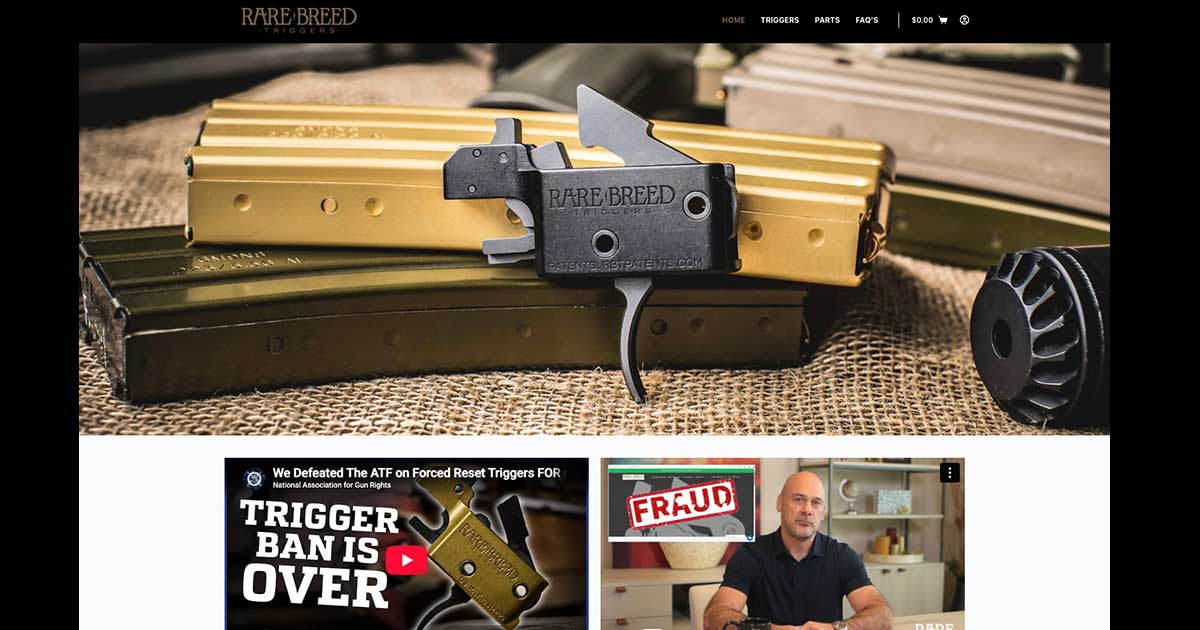
FORT SMITH, Ark. — A Texas firearms company and its patent-holding partner have sued a Fort Smith man in federal court, accusing him of selling 3D-printed parts that let AR-15 rifles fire faster.
Rare Breed Triggers Inc. and ABC IP LLC filed the complaint July 13 in the U.S. District Court for the Western District of Arkansas, Fort Smith Division. The case is docketed as 2:26-cv-02109.
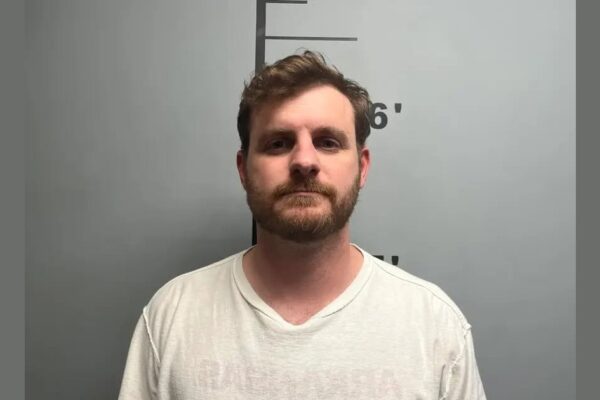
The defendant is Johnne Le, who the complaint says does business as Sko Prints, a sole proprietorship based in Fort Smith. The filing does not list an attorney for Le.
The lawsuit claims Le infringed five patents covering forced reset trigger technology. ABC IP, a Delaware company, owns the patents. Rare Breed, based in Wichita Falls, Texas, is the exclusive licensee.
Plaintiffs are asking for a preliminary and permanent injunction, damages, triple damages and attorney fees. They also want a jury trial.
What the product is
Forced reset triggers are aftermarket parts for semiautomatic rifles. They mechanically push the trigger forward after each shot, which lets a shooter fire faster while still technically pulling the trigger once per round.
The device named in the lawsuit is a three-position “Super Safety.” According to the complaint, it replaces the standard safety selector on an AR-pattern rifle and can be switched between safe, standard semiautomatic and forced reset modes.
The complaint says Le sold the device through skoprints.com in several forms. Those include a partial kit, a complete kit and a version preinstalled in a receiver or a complete firearm. Screenshots attached to the filing show listings ranging from $6 for an installation jig to $60 for the device itself.
Plaintiffs allege direct infringement, induced infringement and contributory infringement. They also allege the conduct was willful, which under federal patent law can open the door to triple damages.
None of the allegations have been tested in court. Le has not filed a response.
Where the case came from
The lawsuit is a product of a deal the federal government cut in Washington last year.
The ATF spent years trying to classify forced reset triggers as machine guns. That position collapsed after the Supreme Court’s 2024 bump stock decision in Garland v. Cargill.
In May 2025, the Justice Department settled its litigation with Rare Breed. The government agreed to stop treating the company’s triggers as machine guns and to return seized devices. Rare Breed agreed to two conditions. It would not design forced reset triggers for pistols. And it would enforce its patents against infringement that could threaten public safety.
That second condition set off a wave of litigation. Rare Breed told a court in May that it had filed more than 45 patent suits since the settlement. A Bloomberg Law review of dockets put the combined total for Rare Breed and ABC IP at more than 130 cases since May 2025.
Legal scholars have described the setup as unusual. It allows the federal government to pursue a public safety goal while a private company absorbs the cost and legal risk of the litigation.
The volume of cases has already forced consolidation. In April, the Judicial Panel on Multidistrict Litigation centralized the suits in the Eastern District of Texas under U.S. District Judge Amos L. Mazzant III. The panel later renamed the docket In re: Rare Breed Triggers Patent Litigation.
The Fort Smith case appears eligible for transfer into that group.
The open source question
The Super Safety was not a Rare Breed product.
It was designed by Tim Hoffman of Hoffman Tactical and released publicly as an open source file. The design spread through online 3D-printing communities, where hobbyists and small shops downloaded it for free.
The complaint against Le leans on that history. It repeatedly cites Hoffman’s own guide, “Super Safety 3D Printed Active Trigger System v4.4,” as an exhibit and uses it to describe how the accused device works.
Rare Breed sued Hoffman directly in a separate case. Defendants across the FRT industry have argued the open source release is prior art that should undercut the patents. Plaintiffs dispute that.
Rare Breed’s court filings say the company held off on enforcement for nearly four years while the federal case was pending, and that the settlement obligated it to act.
Get the biggest Arkansas stories in your inbox
Breaking news, arrests and court updates from across the state. Free.
Confirmation email required. Powered by Mailchimp.