Since the first Arkansas families sued Elon Musk’s xAI in July over child sexual abuse images allegedly generated by its Grok chatbot, the litigation has consolidated in Fayetteville, grown to nine federal lawsuits there and drawn a request to make an Arkansas judge the national clearinghouse for every case of its kind.
All nine cases are now before Chief U.S. District Judge Timothy L. Brooks in the Western District of Arkansas. On Oct. 2, the Houston-based Potts Law Firm, which filed the first Arkansas suits, asked the federal Judicial Panel on Multidistrict Litigation to send Grok child-exploitation suits from around the country to Brooks for coordinated pretrial proceedings. Six days later, xAI told Brooks it supports creating that national case and asked him to put the Arkansas suits on hold until the panel decides.
Arkansas Breaking News first reported on the lawsuits Aug. 10, when three had been filed on behalf of girls ages 10, 9 and 6. The suits arise from the criminal case against Russell Bloodworth, a Bentonville photographer accused of using Grok to turn portraits of his young clients into sexually explicit images and videos. Here is what has happened since.
The Little Rock cases moved to Fayetteville
The first two suits were filed in Little Rock and assigned to U.S. District Judge Lee Rudofsky. On Sept. 15, Potts Law Firm, which filed them, voluntarily dismissed both without prejudice, court records show. The firm’s notice in the second case says xAI had not yet been served.
The same plaintiffs then appear in Fayetteville filings. A complaint filed Sept. 17 describes a 10-year-old girl whose parents were contacted by local police in June 2026 about Grok-generated images of her. And on Oct. 13, Potts filed a new suit in Fayetteville under the identical caption used in the second Little Rock case, Jane Doe 2 by her parents John Roe 2 and Jane Roe 2, describing the girl as a 9-year-old who plays soccer, is a Girl Scout and enjoys swimming, roller skating and reading.
Article continues below
▼ Continue reading
The Oct. 13 complaint says Grok created “hundreds, if not thousands,” of explicit images and videos of the girl from photographs uploaded to Grok from Arkansas. It names a broader set of defendants than the August suits: X.AI Corp., X.AI LLC, X Corp., SpaceXAI LLC, SpaceXAI Holdings LLC, X Holdings Corp. and Space Exploration Technologies Corp., the rocket company known as SpaceX. It seeks damages under Masha’s Law, Arkansas’s Sexually Explicit Digital Forgery Act, the Frank Broyles Publicity Rights Protection Act and the state’s product liability and deceptive trade practices laws, along with punitive damages and a court order requiring safeguards.
The other Fayetteville cases were filed Aug. 6 (the third suit ABN reported in August), Aug. 13, Aug. 25, Sept. 3, Sept. 9 (two cases, one of them naming three plaintiffs) and Sept. 17. All use pseudonyms for the children and their parents.
A bid to make Fayetteville the national venue
In an Oct. 2 motion to the Judicial Panel on Multidistrict Litigation, Potts Law Firm asked for the creation of a multidistrict litigation, or MDL, with Brooks presiding. The motion was filed on behalf of the 10-year-old girl from the first Arkansas suit. The panel has docketed it as MDL No. 3205, In re: x.AI/Grok Artificial Intelligence Minor Sexual Exploitation Litigation.
The motion counts 26 plaintiffs nationwide who allege Grok or other AI tools were used to create sexually explicit images of them as minors. About 17 of those claims stem from activities in Arkansas, and at least 14 plaintiffs live in or around the Western District of Arkansas, according to the filing. The rest are in South Carolina, Texas, Tennessee, Wyoming, Wisconsin, Pennsylvania and California. One of the cases also names Stability AI, another AI image company, according to the motion.
The filing argues that every case turns on the same questions: how xAI designed Grok and its “Spicy Mode,” what the company knew about the tool generating child sexual abuse material, and why it limited image generation to paying subscribers instead of shutting the capability off after warnings from researchers, the California attorney general and a coalition of 35 state attorneys general.
It pitches Fayetteville as “geographically central and readily accessible,” notes that the Western District of Arkansas has no pending MDLs, and says Brooks, chief judge since September 2025, is well positioned to manage what it calls “the leading edge of a wave of cases to come.”
xAI enters the Arkansas cases
On Oct. 8, xAI filed motions in the eight Fayetteville cases then pending asking Brooks to temporarily stay them until the multidistrict panel rules. The company is represented in Arkansas by John E. Tull III and Glenn Larkin of the Little Rock firm Quattlebaum, Grooms & Tull, who signed as counsel for SpaceX.AI Corp. and SpaceX.AI LLC, the companies formerly known as X.AI Corp. and X.AI LLC, and for X Corp.
“Defendants intend to support the formation of an MDL,” the company’s brief in the first Fayetteville case says. It counts at least 13 related federal suits, eight in Fayetteville and five in the Northern District of California, and describes each as alleging that “users leveraged Grok’s capabilities and evaded its safeguards to generate sexualized images of other individuals.”
The panel set a briefing schedule Oct. 6 that ends Nov. 3, according to the brief, and xAI expects the transfer motion to be argued at the panel’s Dec. 3 hearing session, with a decision likely by December. Until then, xAI argues, Brooks should hold off on rulings, including its deadline to answer the complaints, so that any MDL judge can handle issues such as protective orders, the children’s use of pseudonyms, scheduling and discovery consistently.
The family in that case opposes the stay, according to xAI, even though its lawyers asked for the consolidation. xAI wrote that a stay would cause “minimal, if any, prejudice” to the plaintiff “especially since Plaintiff’s counsel filed the consolidation motion,” and that if no MDL is formed, “the brief two-month stay will not have caused any prejudice to the parties.” The company asked Brooks to expedite briefing on the request. As of Friday, the court’s docket showed no response from the family and no ruling.
xAI’s own lawsuit against the photographer
Separately, xAI has sued Bloodworth. The company’s complaint, filed July 30 in the U.S. District Court for the Northern District of Texas in Wichita Falls, says Bloodworth created four xAI accounts in March and, between at least March 30 and April 30, uploaded non-sexual images of people and tried to have Grok sexualize them.
According to xAI, Grok initially refused many of those prompts as violations of its content guardrails, and Bloodworth “repeatedly submitted adversarial prompts, with alterations, in an effort to circumvent Grok’s moderation efforts.” The company says some of the images involved the likenesses of minors.
xAI says it discovered one incident on April 22 and reported it to the National Center for Missing and Exploited Children’s CyberTipline on April 23, and that the tip was passed to the Bentonville Police Department on June 8. Bloodworth was arrested June 10. The company says it is “providing its full support to the ongoing prosecution.”
The suit accuses Bloodworth of breaching xAI’s terms of service and invokes an indemnity clause in those terms. It asks the court to order him to cover xAI’s expenses in defending the families’ lawsuits and “any other legal action filed by a victim” of his conduct, to award damages, and to permanently bar him from creating xAI accounts or using Grok. The case is assigned to U.S. District Judge Reed O’Connor. On Oct. 1, O’Connor approved changing the plaintiff’s name from X.AI LLC to SpaceXAI LLC, and xAI filed an amended complaint the next day. The docket shows no response from Bloodworth.
The criminal case
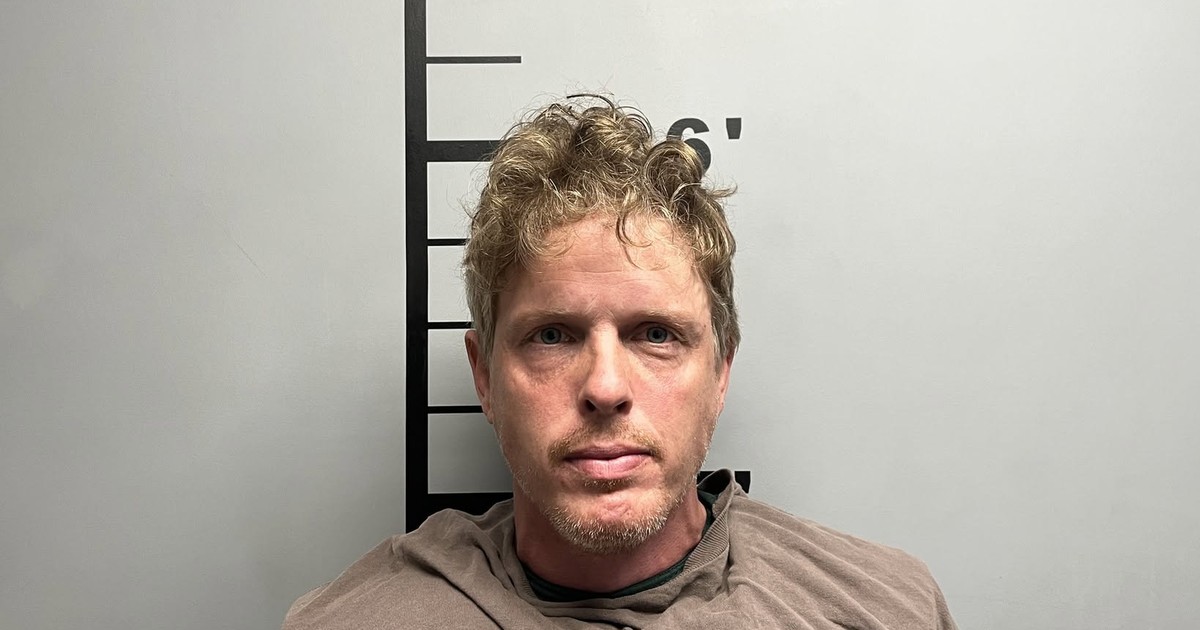
Bloodworth, 43, has pleaded not guilty in Benton County Circuit Court, where he is charged with engaging children in sexually explicit conduct, a Class Y felony, along with pandering or possessing sexually explicit material involving a child and unlawful creation or distribution of deepfake visual material. A hearing that had been set for Sept. 21 was reset; his omnibus hearing is now scheduled for Dec. 7. Prosecutors filed a motion for discovery Sept. 18.
The California class action
A different legal team, including Herrera Law Group and Beasley Allen, filed a proposed class action against xAI on Aug. 18 in the U.S. District Court for the Northern District of California on behalf of six Arkansas children, a group separate from the Potts plaintiffs, KNWA reported. That case is among those the Oct. 2 motion asks the panel to send to Fayetteville.
What comes next
The multidistrict panel will decide whether to centralize the cases and, if so, where, with xAI now on record supporting an MDL. Brooks must rule on xAI’s stay motions. xAI has not yet filed a substantive response to any of the Arkansas complaints, and its defenses, which in the Texas case include the argument that “every response, every image, every generation is the result of the user’s prompts and directions,” have not been tested in any of the families’ cases.
The allegations in the lawsuits have not been proven, and Bloodworth is presumed innocent of the criminal charges.
Get the biggest Arkansas stories in your inbox
Breaking news, arrests and court updates from across the state. Free.
Confirmation email required. Powered by Mailchimp.